
Morning Joint Stiffness
Do your hands, feet, or back feel locked up when you first get out of bed? Does it take a long time, or a hot shower, before your joints move normally? Has a clinician mentioned that your stiffness could be a sign of inflammation?
Morning stiffness is common, and much of it is harmless. How long it lasts, and what comes with it, can help separate ordinary stiffness from an inflammatory condition that benefits from earlier care. An evaluation aims to find out which applies to you.
Dr. Syed Alam evaluates morning joint stiffness at West Houston Arthritis and Rheumatology for patients from Katy and the surrounding communities.

Meet Dr. Syed Alam, MD, FACR
Double Board-Certified, Fellowship-Trained Rheumatologist · Musculoskeletal Ultrasound Trained · 10+ Years of Experience
Dr. Alam completed his rheumatology fellowship at Temple University Hospital after an internal medicine residency at John H. Stroger, Jr. Hospital. His clinical interests include rheumatoid arthritis, lupus, psoriatic arthritis, gout, Sjögren’s disease, osteoporosis and other rheumatic conditions.
Read the full profile →
Are You Experiencing Morning Joint Stiffness?
Stiffness on waking is something almost everyone feels now and then. What matters is how long it lasts and how it behaves. When a joint is inflamed, its lining makes extra fluid. Overnight, while you lie still, that fluid collects in and around the joint, and moving pumps it away. That is why inflammatory stiffness is worst first thing and eases as the morning goes on.
Signs to Notice
- Stiffness lasting longer than an hour before your joints move normally.
- Trouble making a fist or gripping a toothbrush or cup first thing.
- Seizing up after sitting, such as after a long drive or meeting, then loosening after a few minutes of walking.
- The same joints affected on both sides, such as both hands or both wrists.
- Visible puffiness over the knuckles, wrists, or the balls of the feet.
- Fatigue out of proportion to what you have done, or a general sense of being unwell.
How to Time Your Stiffness
Most people guess, and guesses are unreliable. Note the time you get out of bed and the time your hands and other affected joints move normally, not just a little better. Repeat this for four or five days, including a weekend. Stiffness that loosens within about 30 minutes is more typical of osteoarthritis or mechanical strain; stiffness that lasts more than an hour points toward inflammatory arthritis. Neither is an absolute rule, but a written record is far more useful at a visit than an impression. Check whether your symptoms need same-day care.
Timing your stiffness and still unsure what it means? Request a visit to talk it through.
Request an AppointmentWhen Does Morning Stiffness Need Same-Day Care?
Most morning stiffness is not an emergency. A few combinations, however, need prompt medical attention rather than a routine appointment.
Get Medical Help Without Delay
- A new headache, scalp tenderness, jaw pain when chewing, or any change in vision, especially with shoulder or hip stiffness in someone over 50: Seek same-day care. These can be signs of giant cell arteritis, which can threaten eyesight and needs urgent treatment. For sudden vision loss, go to an emergency department.
- A single hot, very swollen joint with fever or feeling unwell: Seek same-day care so a joint infection can be ruled out.
- Sudden, severe aching and stiffness across the shoulders and hips after age 50 that makes it hard to get out of bed: Arrange prompt assessment, as this pattern can suggest polymyalgia rheumatica.
- Back stiffness with new numbness around the groin, leg weakness, or loss of bladder or bowel control: Go to an emergency department.
- Stiffness with chest pain or trouble breathing: Call 911.
These examples are not a complete list. If your stiffness is ongoing but not urgent, learn what may be causing it.
What May Be Causing Your Morning Stiffness?
The conditions below can cause prolonged morning stiffness. They are possibilities to discuss, not a diagnosis.
Rheumatoid Arthritis
The classic cause. Stiffness often lasts an hour or more, affects the small joints of the hands, wrists, and feet on both sides, and comes with swelling. This is a pattern where early assessment matters, because timely treatment can help protect the joints.
Axial Spondyloarthritis
Stiffness and pain in the lower back and buttocks that is worse after rest, may wake you in the second half of the night, and eases with movement. It usually begins before age 45 and is often mistaken for ordinary back pain for years.
Psoriatic Arthritis
Often affects joints unevenly, can swell a whole finger or toe, and comes with psoriasis or nail changes that are easy to overlook when they are limited to the scalp or nails.
Polymyalgia Rheumatica
Sudden, marked stiffness and aching across the shoulders, neck, and hips in people over 50, sometimes severe enough that lifting the arms or rising from a chair is difficult. It can occur alongside giant cell arteritis, which is why a new headache or vision change needs urgent attention.
Osteoarthritis and Other Causes
Osteoarthritis also causes stiffness, but it usually settles within half an hour and tends to worsen with use as the day goes on. Poor sleep, an underactive thyroid, heavy exercise the day before, and fibromyalgia can also make mornings stiff. Learn when to arrange an evaluation.
Wondering which of these fits your mornings? A rheumatology evaluation can help sort out the cause.
Request an Evaluation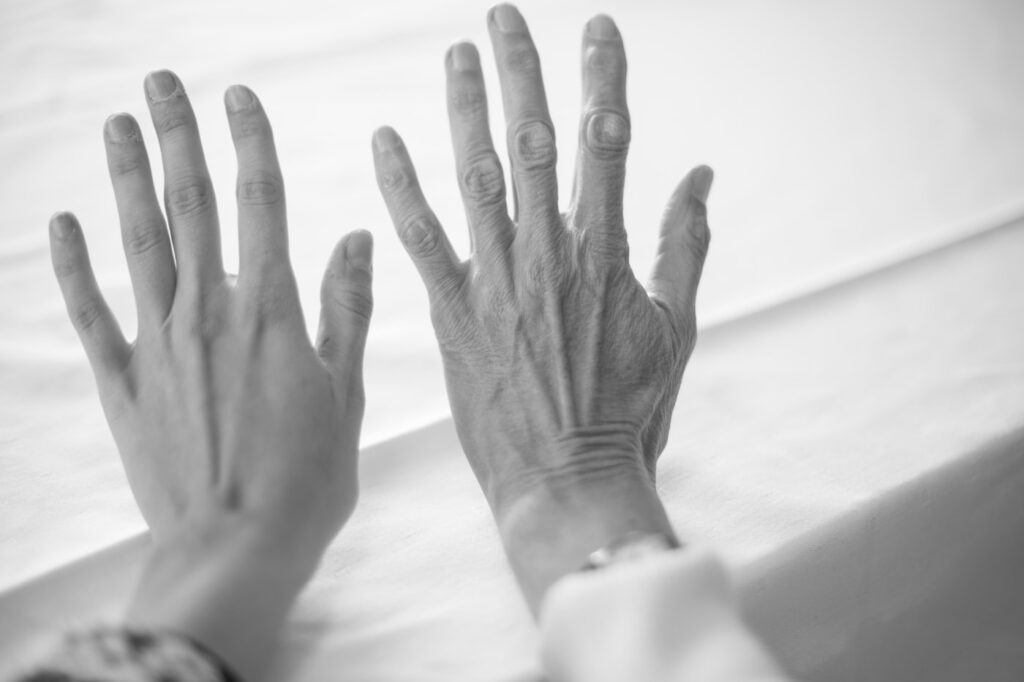
Photo for illustration. Images do not depict patients of this practice.
How Long Should You Wait Before Booking?
Stiffness after unusual exercise or a poor night's sleep usually fades within days. Ask about a rheumatology evaluation if any of the following apply:
- Morning stiffness regularly lasts longer than an hour.
- Stiffness has continued for more than six weeks.
- Joints look swollen, or the same joints are affected on both sides.
- Stiffness comes with fatigue, a rash, low-grade fever, or unexplained weight loss.
- You have psoriasis, inflammatory bowel disease, or a family history of autoimmune disease.
Sudden severe stiffness across the shoulders and hips after age 50 should be assessed promptly rather than after six weeks. You do not need abnormal blood tests to be seen. Already referred? Ask whether the referral is routine or urgent, and tell your referring clinician if symptoms change while you wait. See what the evaluation involves.
If stiffness is shaping your mornings, it deserves a closer look. Request an appointment instead of waiting it out.
Arrange Your VisitWhat Does the Evaluation Involve?
Your description of the stiffness and a careful examination often say more than any single test.
Your History and Examination
Expect questions about how long stiffness lasts, which joints are involved, whether movement or rest helps, and whether it returns after sitting. Skin, eye, bowel, and back symptoms can offer clues. Each joint is checked for swelling and tenderness, and the spine and pelvis may be assessed when back stiffness is part of the picture.
Tests That May Be Ordered
- ESR and CRP measure inflammation, though they can be normal in active disease.
- Rheumatoid factor and anti-CCP help assess for rheumatoid arthritis.
- A blood count and thyroid function look for other contributors to stiffness and fatigue.
- X-rays or ultrasound of the hands and feet can show inflammation or joint changes.
- MRI of the sacroiliac joints may be considered when inflammatory back pain is suspected.
Keep timing your stiffness after any treatment begins. A shorter morning is often one of the earliest practical signs that a plan is helping, and a number at each visit is more useful than saying it is about the same. See which type of care fits your symptoms.
Bring your stiffness notes and previous results to a visit so they can be reviewed together.
Schedule Your VisitRheumatologist, Primary Care, or Physical Therapy?
- Rheumatology focuses on inflammatory and autoimmune causes of stiffness, such as rheumatoid arthritis, spondyloarthritis, and polymyalgia rheumatica.
- Primary care can check for thyroid problems, medication effects, and sleep issues when the cause is unclear.
- Physical therapy can help with mobility and strength once inflammatory causes have been considered.
If stiffness lasts over an hour, involves several joints, or comes with swelling, rheumatology is often a sensible place to start.
Easing Mornings in the Meantime
A warm shower, gentle range-of-motion movements in bed before getting up, and regular movement through the day can make mornings easier, and a steady sleep routine helps too. These steps do not treat the underlying cause, so keep recording your stiffness rather than experimenting with remedies. Prepare for your visit.
Questions about scheduling or referral requirements? Call our office before you book.
Call Our OfficeWhat to Do Next
A few simple steps help your visit focus on what matters most to you.
- Time your stiffness. Record how long it takes for your joints to move normally on four or five mornings.
- Note the pattern. List which joints are stiff, whether both sides are affected, and whether sitting still makes it worse.
- Gather your records. Bring previous blood test and imaging reports and a list of medications and supplements.
- Confirm requirements. Check with the office and your insurance plan about referrals before scheduling.
At the visit, Dr. Alam reviews your history, examination, and earlier results together and explains what further testing, if any, may help. Ask what to track between visits so changes can be measured over time.
West Houston Arthritis and Rheumatology sees patients from Katy, Fulshear, Cinco Ranch, Cypress, Richmond, Rosenberg, Sealy, Sugar Land, and West Houston at our office at 19002 Park Row Blvd, Suite 100, Houston, TX 77084. We are accepting new patients, accept most major insurance plans, and are open Monday through Friday, 8:00 AM to 5:00 PM.
Ready to find out why your mornings are so stiff? Request an appointment or call our office to get started.
Request an Appointment Call (832) 305-5226Important: This page provides general education, not an individual diagnosis or treatment plan. Appointment requests are not monitored for emergencies. For a medical emergency, call 911.
Possible causes
Conditions That Can Cause Morning Stiffness
Frequently asked questions
Common Questions About Morning Joint Stiffness
How long does morning stiffness have to last to be a concern?
Stiffness that regularly lasts more than an hour points toward inflammatory arthritis, while stiffness that eases within about 30 minutes is more typical of osteoarthritis. How long it lasts matters more than how severe it feels, so time it over several mornings.
Why are my joints worst first thing in the morning?
Inflammatory fluid gathers in the joints while you are still overnight and disperses once you start moving. Mechanical problems tend to do the opposite and worsen with use as the day goes on.
Is morning stiffness always a sign of arthritis?
No. Sleep position, poor sleep, heavy exercise the day before, an underactive thyroid, and fibromyalgia can all cause stiffness. Long-lasting stiffness together with visible joint swelling is what most strongly suggests inflammatory arthritis.
Can I have inflammatory arthritis with stiffness but no swelling?
Yes, particularly early on and in axial spondyloarthritis, which mainly affects the spine and pelvis. A normal-looking hand examination does not rule out an inflammatory cause.
Does cold or damp weather make stiffness worse?
Many people feel stiffer in cold or damp weather. Weather affects comfort but is not thought to change the underlying condition. Staying warm and active through cooler months can help.
Should I rest more if I feel stiff?
Usually not. Long periods of stillness make inflammatory stiffness worse, and gentle, regular movement tends to help more. A single joint that is suddenly hot and very swollen should be rested until it is assessed.
What tests might be ordered?
Often inflammation markers, rheumatoid factor and anti-CCP, a blood count, and thyroid function. Depending on the pattern, X-rays or ultrasound of the hands and feet, or an MRI of the sacroiliac joints, may be considered.
I am over 50 with sudden shoulder and hip stiffness. What could it be?
That pattern can suggest polymyalgia rheumatica, especially when it develops over days to weeks and makes lifting the arms or rising from a chair difficult. If you also have a new headache, jaw pain when chewing, or vision changes, seek same-day care. Review the same-day warning signs.

Still Have a Question?
Call our office about appointments, referrals, or preparing for your visit.
Call Our OfficeGet started
Request an Appointment With Dr. Alam
Take the next step toward understanding morning stiffness that is slowing down your day.