
Back Pain and Morning Stiffness
Back pain that is worst in the morning and improves with movement, especially in adults under 45, may be inflammatory rather than mechanical.

Meet Dr. Syed Alam, MD, FACR
Double Board-Certified, Fellowship-Trained Rheumatologist · Musculoskeletal Ultrasound Trained · 10+ Years of Experience
Dr. Alam completed his rheumatology fellowship at Temple University Hospital after an internal medicine residency at John H. Stroger, Jr. Hospital. His clinical interests include rheumatoid arthritis, lupus, psoriatic arthritis, gout, Sjögren’s disease, osteoporosis and other rheumatic conditions.
Read the full profile →
Two very different kinds of back pain
Back pain is extremely common and usually mechanical: a strain, a disc, or simple wear. Mechanical back pain gets worse the more you do and better when you rest. It is the pattern most people and most clinicians expect.
Inflammatory back pain behaves in the opposite way. It is worst after rest, particularly first thing in the morning, wakes people in the second half of the night, and eases once they get up and move. Recognising this reversal is the single most important step towards diagnosing axial spondyloarthritis, and it is missed often enough that the average delay to diagnosis is still measured in years.
The five features of inflammatory back pain
- Onset before the age of 45
- Gradual onset over weeks to months rather than a sudden injury
- Duration of more than three months
- Morning stiffness lasting more than 30 minutes
- Improvement with exercise and no improvement with rest
Four or more of these features present together makes inflammatory back pain likely and is a clear reason for rheumatology referral.
Not sure whether your symptoms need a specialist? A rheumatology evaluation can give you a clear answer.
Request an AppointmentWhat else to look for
Axial spondyloarthritis is a whole-body condition, and the features outside the spine often clinch the diagnosis.
- Alternating buttock pain, shifting from one side to the other
- Heel pain where the Achilles tendon or plantar fascia attaches
- Swelling of a knee, ankle or a whole finger or toe
- A painful, red, light-sensitive eye, which is uveitis and needs same-day care
- Psoriasis, anywhere including the scalp and navel
- Inflammatory bowel disease, or persistent diarrhoea and blood in the stool
- Chest wall pain and reduced chest expansion
- A family history of spondyloarthritis, psoriasis or inflammatory bowel disease
Night pain in particular
Waking regularly in the second half of the night with back pain, needing to get up and move around before you can settle, is a strong indicator of inflammation rather than a mattress problem. If this persists despite regular anti-inflammatory treatment, it usually means the inflammation is not adequately controlled.
Early assessment gives you the widest range of treatment options.
Book an Evaluation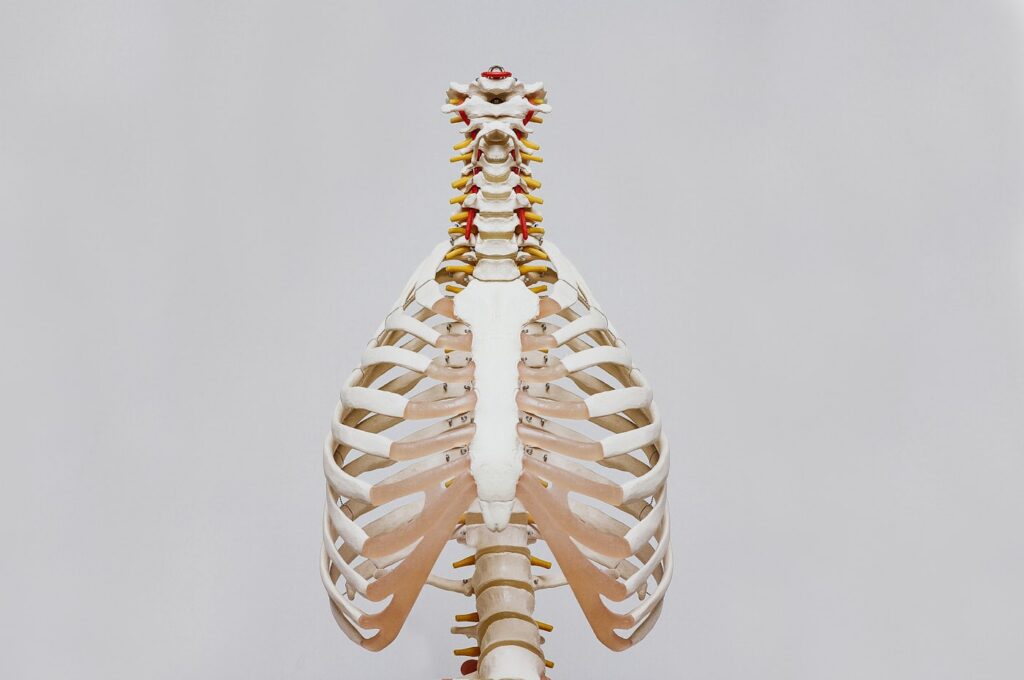
Photo for illustration. Images do not depict patients of this practice.
Causes of inflammatory back pain
Axial spondyloarthritis and ankylosing spondylitis
The main cause. Inflammation of the sacroiliac joints and spine, typically beginning in the twenties or thirties. Some patients have visible changes on X-ray, which is classical ankylosing spondylitis; others have identical symptoms with inflammation visible only on MRI. Both are treated the same way.
Psoriatic arthritis
Can involve the spine as well as the peripheral joints, particularly in people with nail or scalp psoriasis.
Arthritis related to inflammatory bowel disease
Crohn's disease and ulcerative colitis are associated with inflammatory back pain, and bowel symptoms should always be mentioned because they change the choice of treatment.
Reactive arthritis
Can follow a gut or genitourinary infection and may involve the spine as well as peripheral joints.
Polymyalgia rheumatica
In people over 50, marked morning stiffness across the shoulders, neck and hips rather than the lower back, coming on over days to weeks.
How it is diagnosed
History and examination
The history carries most of the diagnostic weight. Your rheumatologist will ask about the timing of the pain, night waking, morning stiffness and the response to exercise, then measure spinal movement in several directions, assess chest expansion, and check the sacroiliac joints, heels and other tendon insertion points.
Imaging
X-rays of the sacroiliac joints are the starting point but only show change after damage has occurred, which can take years. MRI detects active inflammation much earlier and is the test that most often makes the diagnosis in younger patients. A normal X-ray with a typical history is a reason for an MRI, not for reassurance.
Blood tests
HLA-B27 supports the diagnosis but neither confirms nor excludes it, since about 8 percent of the general population carries it without ever developing disease. ESR and CRP may be raised but are normal in many patients with active inflammation.
We will take a full history, examine every affected joint and order only the tests that change your care.
Schedule Your VisitWhat helps while you are waiting
- Keep moving. Exercise is core treatment in inflammatory back pain, not an optional extra.
- Do a short mobility routine every morning rather than waiting for the stiffness to pass.
- Swim if you can; it works the whole spine without loading it.
- Break up long periods of sitting, at least every 30 to 45 minutes.
- Sleep on a firm mattress with a thin pillow, and try lying flat on your front briefly each day.
- Stop smoking, which worsens spinal progression and reduces lung capacity.
Take anti-inflammatory medication regularly rather than only when the pain peaks, if it is safe for you. In inflammatory back pain these often work better than people expect, and the response is itself diagnostically useful.
Treatment is matched to your diagnosis, your other conditions and your goals.
Start Your Treatment PlanExercise that suits inflammatory back pain
In inflammatory back pain, exercise is not a supplement to treatment. It is treatment, with evidence behind it, and it is the part that stays under your control. The aim is to maintain the spine's ability to extend and rotate, because those are the movements lost first.
A daily routine matters more than intensity
Ten to fifteen minutes every day beats an hour twice a week. Most people find first thing in the morning works best, since it also shortens the stiffness that would otherwise dominate the next few hours.
What to include
- Spinal extension: lying flat on your front, then gently propping onto the forearms
- Rotation: seated or lying twists through a comfortable range
- Side flexion: sliding a hand down the outside of the leg while standing
- Neck movement in all directions, since the neck is affected in many patients
- Deep breathing exercises to maintain chest expansion
- Hip and hamstring stretches, which reduce load on the lower back
Activities that suit the condition
Swimming is close to ideal, working the whole spine without loading it. Walking, cycling with an upright posture, yoga and Pilates all help when taught by someone who knows the diagnosis. High-impact contact sport is worth discussing individually, particularly where the spine has fused, since a fused spine is more vulnerable to fracture.
What to avoid
Prolonged sitting in flexion is the main thing to break up, ideally every thirty to forty-five minutes. Tell any physical therapist or chiropractor about the diagnosis before treatment, since spinal manipulation may be unsafe in a fused spine.
When to see a rheumatologist in Katy
Ask for a rheumatology evaluation if back pain began before 45, has lasted more than three months, is worse after rest and better with movement, wakes you in the second half of the night, or comes with morning stiffness over 30 minutes. Heel pain, uveitis, psoriasis or a family history strengthen the case.
Do not let a normal X-ray end the conversation. Early inflammation is visible only on MRI, and treatment started early is what prevents long-term structural change.
New patients are welcome at our Katy clinic, and a referral is not required for most plans.
Talk to Our RheumatologistPLACEHOLDER: this page must be reviewed and approved by Dr. Syed Alam before launch. Add the review date here.
Possible causes
Conditions associated with this
Frequently asked questions
Back Pain and Morning Stiffness: your questions answered
How is inflammatory back pain different from ordinary back pain?
It begins gradually before 45, lasts more than three months, is worse after rest and in the early morning, wakes you in the second half of the night, and improves with exercise. Mechanical back pain does the opposite, worsening with activity and easing with rest.
My X-ray was normal. Can I still have spondyloarthritis?
Yes, and this is common. X-rays only show change once structural damage has occurred, which can take years. MRI detects active inflammation far earlier. A normal X-ray with a typical history is a reason for an MRI.
Does a positive HLA-B27 mean I have it?
No. Around 8 percent of the general population carries HLA-B27 and most never develop disease. It supports the diagnosis when the clinical picture fits but neither confirms nor excludes it on its own.
Why does my back hurt more at night?
Inflammatory back pain characteristically wakes people in the second half of the night, because inflammatory fluid accumulates during stillness. Persistent night pain despite regular anti-inflammatory treatment usually means the inflammation needs better control.
Should I rest my back?
No. Prolonged rest makes inflammatory back pain worse. Regular movement and a daily mobility routine are among the most effective treatments available, and they help maintain posture over the long term.
Can women get axial spondyloarthritis?
Yes. It was historically considered a male disease, but women are affected nearly as often. Women more often have neck and peripheral joint involvement and less obvious X-ray change, which contributes to later diagnosis.
What is uveitis and why does it matter?
Inflammation inside the eye causing a painful, red, light-sensitive eye with blurred vision, usually on one side. It affects a substantial minority of patients with spondyloarthritis and needs same-day assessment, because untreated it can damage vision.
Will my spine fuse?
Far less likely than it once was. Effective treatment, particularly biologic medicines, combined with consistent exercise, has greatly reduced the proportion of patients who develop advanced fusion.

Still have a question?
Our office is happy to answer questions before you book. Call us or send a request and we will call you back.
Ask Us Your QuestionGet started
Get an evaluation at our Katy clinic
You do not need a diagnosis to make an appointment. Our rheumatologist will help find the cause.