Bone Density Testing and DEXA Scans in Katy, TX
A DEXA scan measures how strong your bones are. It is quick, painless, uses a very low dose of radiation, and it is the test that identifies osteoporosis before a fracture does.
Meet Dr. Syed Alam, MD, FACR
Double Board-Certified, Fellowship-Trained Rheumatologist · Musculoskeletal Ultrasound Trained · 10+ Years of Experience
Dr. Alam completed his rheumatology fellowship at Temple University Hospital after an internal medicine residency at John H. Stroger, Jr. Hospital. His clinical interests include rheumatoid arthritis, lupus, psoriatic arthritis, gout, Sjögren’s disease, osteoporosis and other rheumatic conditions.
Read the full profile →
What a DEXA scan is
DEXA stands for dual-energy X-ray absorptiometry. Two low-dose X-ray beams of different energies pass through the body, and the difference in how they are absorbed allows the density of bone to be calculated separately from soft tissue.
It is the standard test for diagnosing osteoporosis, and it is the only widely available way to identify the condition before a fracture happens. Because osteoporosis is silent until a bone breaks, screening rather than symptoms is what drives diagnosis.
What is measured
Usually the lower spine and one hip, since these are the sites where fractures cause the most harm and where measurement is most reliable. Sometimes the forearm is used instead, for example if both hips have been replaced or the spine has extensive arthritis that would distort the reading.
How it compares with other scans
Heel ultrasound and portable screening devices used at health fairs are not diagnostic. They can flag people who should have a proper scan, but they cannot diagnose osteoporosis or guide treatment. If you have had one and been told your bones are thin, a central DEXA is the appropriate next step.
Not sure whether your symptoms need a specialist? A rheumatology evaluation can give you a clear answer.
Request an AppointmentWhat happens during the scan
This is one of the easier tests in medicine, and patients are frequently surprised how little there is to it.
- You lie fully clothed on a padded table
- Your legs may be raised on a cushioned block to flatten the lower spine
- A scanning arm passes slowly above you without touching you
- You are asked to stay still and hold your breath briefly at points
- The whole appointment usually takes 10 to 15 minutes
- There is no injection, no enclosed tunnel and no noise beyond a quiet hum
How to prepare
- Wear loose clothing without metal zips, buttons or underwiring
- Avoid calcium supplements for 24 hours beforehand, as they can affect the reading
- Tell the technician about recent barium studies or contrast scans, which need a gap
- Tell them if you might be pregnant
- Bring previous DEXA reports if the scan is at a different centre, since comparison matters
Radiation
The dose is very small, considerably less than a chest X-ray and comparable to a fraction of the natural background radiation you receive in a day. For anyone at risk of fracture, the benefit substantially outweighs this.
Early assessment gives you the widest range of treatment options.
Book an Evaluation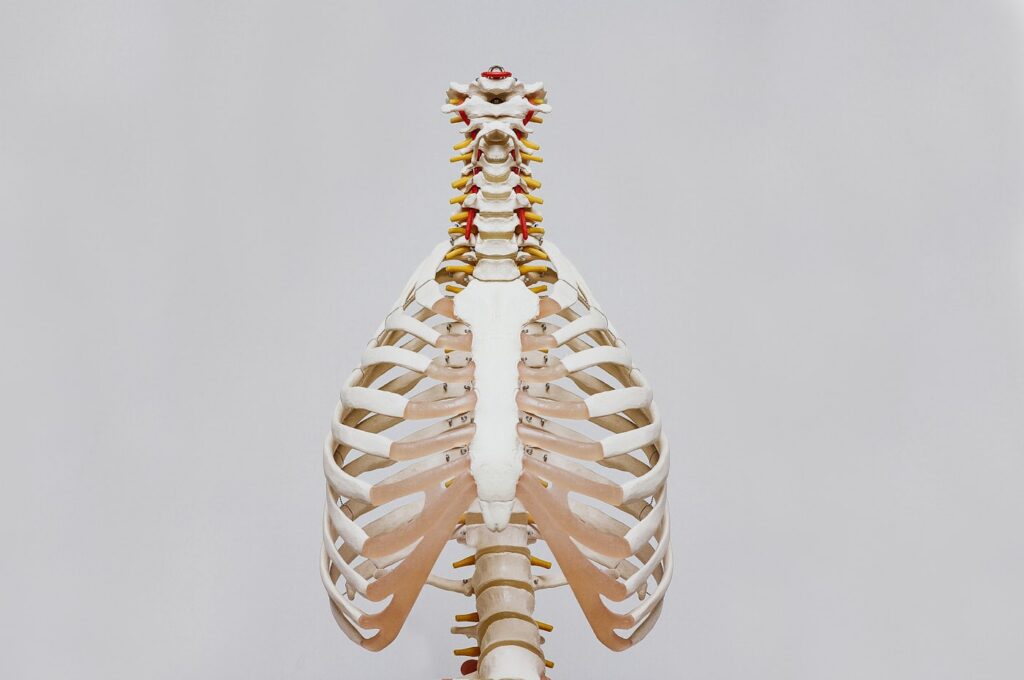
Photo for illustration. Images do not depict patients of this practice.
Understanding your results
The T-score
This compares your bone density with that of a healthy young adult at peak bone mass. It is the number used to diagnose osteoporosis.
- -1.0 or above: normal
- Between -1.0 and -2.5: osteopenia, meaning lower than normal but not osteoporosis
- -2.5 or below: osteoporosis
- -2.5 or below with a fragility fracture: severe or established osteoporosis
The Z-score
This compares you with people of your own age and sex. It is used in younger adults, in premenopausal women and in men under 50. A low Z-score, generally below -2.0, is a signal to search for a secondary cause such as thyroid or parathyroid disease, coeliac disease, low testosterone or a medication effect.
Why the score is not the whole answer
Bone density is one input into fracture risk, not the whole of it. Tools such as FRAX combine it with age, sex, weight, previous fracture, family history, steroid use, smoking and alcohol to estimate your ten-year risk. This is why two people with the same T-score can be given different advice, and why someone with osteopenia sometimes needs treatment while someone else with the same reading does not.
We will take a full history, examine every affected joint and order only the tests that change your care.
Schedule Your VisitWho should have a scan
- All women aged 65 and over, and all men aged 70 and over
- Postmenopausal women and men over 50 with additional risk factors
- Anyone who has broken a bone from a minor fall after the age of 50
- Anyone taking or about to take steroids for three months or longer
- People with conditions that weaken bone, including rheumatoid arthritis, coeliac disease, inflammatory bowel disease, overactive thyroid or parathyroid, and chronic kidney disease
- Women with early menopause, and men with low testosterone
- Anyone with a parent who fractured a hip
- People with significant height loss or a stooped posture
If you have already had a fragility fracture of the hip or spine, treatment is usually indicated regardless of what a scan shows. In that situation a scan is still useful as a baseline for measuring response, but it should not delay treatment.
Treatment is matched to your diagnosis, your other conditions and your goals.
Start Your Treatment PlanHow often to repeat it
More often is not better. Bone changes slowly, and scanning too frequently produces differences that reflect measurement variation rather than real change.
- Every one to two years while on treatment, to confirm it is working
- Every two years or longer where density is borderline and untreated
- Longer intervals, sometimes many years, where density is normal and risk is low
- Sooner if circumstances change, such as starting steroids or sustaining a fracture
Where possible, repeat scans should be done on the same machine, because readings differ slightly between devices and comparison is what matters. If you change centre, bring the previous report so the numbers can be interpreted alongside each other rather than in isolation.
PLACEHOLDER: confirm whether DEXA scanning is performed on site or arranged by referral, and add the practical details, including how results are communicated.
What happens after the scan
A scan on its own changes nothing. What matters is the assessment that follows it.
- Blood tests to look for treatable secondary causes: calcium, vitamin D, kidney and liver function, thyroid function, and where indicated parathyroid hormone, testosterone or coeliac screening
- A fracture risk calculation combining the scan with your other risk factors
- A review of medications that affect bone, particularly steroids
- A discussion about calcium, vitamin D, exercise and fall prevention
- A decision about whether medication is indicated, and if so which
If your scan shows osteopenia and your calculated risk is low, the outcome may simply be advice and a repeat scan in a few years. That is a legitimate result rather than a failure to act.
Arranging a scan in Katy
Ask about bone density testing if you meet any of the screening criteria above, particularly if you have broken a bone from a minor fall, are starting long-term steroids, or have lost height.
Bring any previous DEXA reports, a list of your medications, and details of any fractures including how they happened. The mechanism matters: a bone that breaks from standing height is a fragility fracture and carries different weight from one broken in a car accident.
New patients are welcome at our Katy clinic, and a referral is not required for most plans.
Talk to Our RheumatologistPLACEHOLDER: this page must be reviewed and approved by the physician before launch. Confirm that every treatment described here is one this practice actually provides, and add the reviewing physician's name and review date.
Frequently asked questions
Bone Density Testing: your questions answered
Does a DEXA scan hurt?
No. You lie fully clothed on a padded table while a scanning arm passes above you without touching you. There is no injection and no enclosed tunnel. Most people find it easier than they expected.
How much radiation is involved?
Very little, considerably less than a chest X-ray. For anyone at risk of fracture the benefit substantially outweighs this small exposure.
What is the difference between a T-score and a Z-score?
A T-score compares you with a healthy young adult and is used to diagnose osteoporosis. A Z-score compares you with people of your own age and is used in younger adults, where a low value prompts a search for an underlying cause.
I have osteopenia. Do I need treatment?
Not automatically. Osteopenia means density is below normal but above the osteoporosis threshold. Whether treatment is recommended depends on your overall fracture risk, calculated from the scan together with age, fracture history, steroid use and other factors.
How often should I repeat the scan?
Usually every one to two years on treatment, and less often if density is normal and risk is low. Scanning too frequently detects measurement variation rather than real change.
Can I eat before the scan?
Yes, normal eating is fine. Avoid calcium supplements for 24 hours beforehand, as they can affect the reading, and wear clothing without metal fastenings.
Is a heel ultrasound the same thing?
No. Heel ultrasound and portable screening devices can flag people who should be tested properly but cannot diagnose osteoporosis or guide treatment. A central DEXA of the spine and hip is the diagnostic test.
What if I have had a fracture already?
A fragility fracture of the hip or spine usually indicates treatment regardless of what a scan shows. A scan is still useful as a baseline, but it should not delay starting treatment.
Still have a question?
Our office is happy to answer questions before you book. Call us or send a request and we will call you back.
Ask Us Your QuestionGet started
Considering bone density testing?
Request an appointment at our Katy clinic. New patients are welcome, and referrals are accepted but not required.