
Gout Treatment in Katy, TX
Effective gout care has two entirely separate parts: settling the attack, and lowering uric acid so attacks stop returning. Confusing the two is the single most common reason people keep having gout for years.
Meet Dr. Syed Alam, MD, FACR
Double Board-Certified, Fellowship-Trained Rheumatologist · Musculoskeletal Ultrasound Trained · 10+ Years of Experience
Dr. Alam completed his rheumatology fellowship at Temple University Hospital after an internal medicine residency at John H. Stroger, Jr. Hospital. His clinical interests include rheumatoid arthritis, lupus, psoriatic arthritis, gout, Sjögren’s disease, osteoporosis and other rheumatic conditions.
Read the full profile →
The two halves of gout treatment
Gout is unusual among rheumatic diseases in that near-complete control is a realistic expectation. Most people who continue to have attacks are not treatment-resistant; they are receiving only half the treatment.
Half one: treating the attack
Anti-inflammatory medication settles the inflammation caused by crystals already in the joint. It works, it is important, and it does nothing whatever about the crystals themselves. Once the attack passes, the crystals remain and continue to accumulate.
Half two: lowering uric acid
Urate-lowering therapy reduces the concentration of uric acid in the blood so that existing crystals dissolve and no new ones form. This is the part that ends the disease rather than managing episodes. Once the level is below target and stays there, attacks stop for the large majority of people.
If you have had more than one attack and are not on urate-lowering treatment, that is the conversation to have.
Not sure whether your symptoms need a specialist? A rheumatology evaluation can give you a clear answer.
Request an AppointmentTreating an acute attack
The earlier treatment starts, the shorter the attack. Most people learn to recognise the warning sensation before the joint is visibly swollen, and treating at that point can stop the attack developing.
The options
- Non-steroidal anti-inflammatories, effective when kidney function and stomach tolerance allow
- Colchicine, most effective when started within the first day
- Oral steroids, useful where anti-inflammatories and colchicine are unsuitable
- A steroid injection into the joint, particularly for a single large joint
Practical measures
Rest the joint, apply ice, keep bedding off the affected toe with a frame or pillow, wear an open shoe, and keep drinking fluids. Do not stop urate-lowering medication you are already taking; stopping it during an attack prolongs the underlying problem.
Have a plan in place
Ask for a written plan covering which medicine to take, at what dose and how soon, and where practical keep a supply at home. Waiting several days for an appointment usually means several extra days of severe pain.
Early assessment gives you the widest range of treatment options.
Book an Evaluation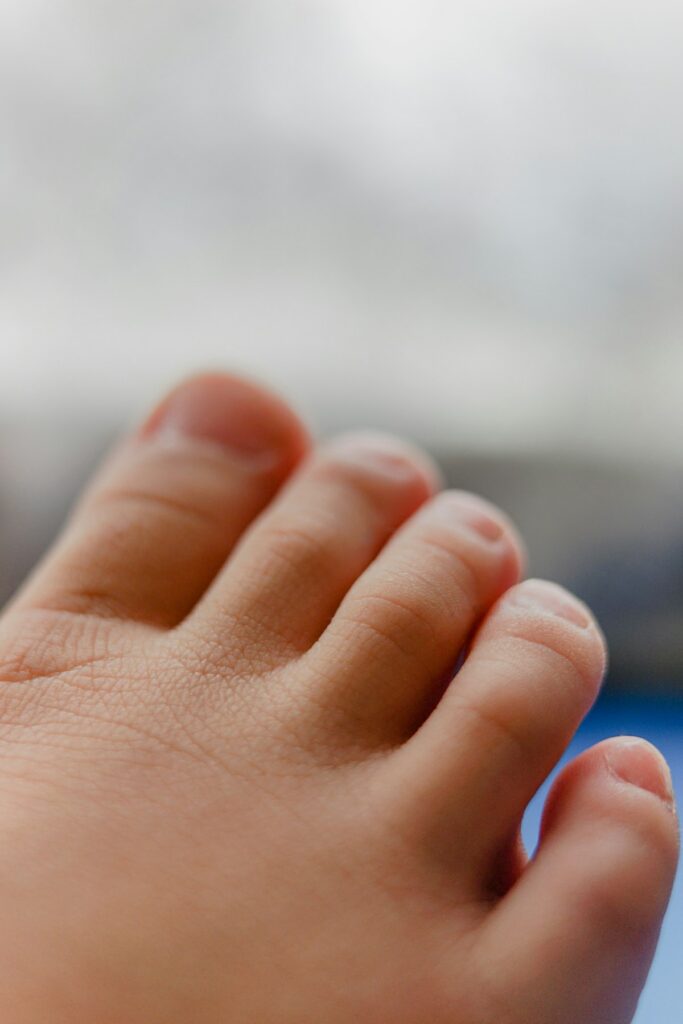
Photo for illustration. Images do not depict patients of this practice.
Urate-lowering therapy
The medicines
Allopurinol is first choice for most people. It reduces uric acid production and has decades of evidence behind it. Febuxostat is an alternative, often used where allopurinol is not tolerated. Probenecid increases excretion by the kidneys and is an option in some patients. Pegloticase is reserved for severe, refractory disease.
Treat to target, not to a fixed dose
This is where treatment most often falls short. Allopurinol is started at a low dose and increased gradually with blood tests every few weeks until uric acid is below target, usually 6 mg/dL and lower where tophi are present. Many people are left on a starting dose that never reaches target, which is why they keep having attacks despite taking a tablet every day. If you are on treatment and still having attacks, ask what your last uric acid level was.
Expect attacks in the first months
As uric acid falls, existing crystals begin to dissolve, and that process itself provokes inflammation. Attacks during the first three to six months of treatment are common and indicate the medicine is working, not failing. A low dose of colchicine or an anti-inflammatory is usually prescribed alongside to cover this period. Stopping the urate-lowering drug because you had an attack is the most common reason treatment fails.
It is long term
This is preventive treatment. Stopping once attacks have ceased allows uric acid to rise and crystals to reform, and attacks typically return within months. Kidney function is checked before starting and monitored afterwards, and reduced function guides the dose rather than ruling treatment out.
We will take a full history, examine every affected joint and order only the tests that change your care.
Schedule Your VisitDiet, alcohol and lifestyle
Diet matters, but its role is routinely overstated, and treating it as the whole answer is why many people go years without effective treatment.
- Reduce beer and spirits, which raise uric acid more than wine
- Cut drinks sweetened with fructose, including many soft drinks and juices
- Moderate red meat, organ meats and shellfish rather than eliminating them
- Stay well hydrated
- Lose weight gradually if needed; crash dieting can trigger attacks
- Low-fat dairy and cherries are associated with modestly lower risk
Review your other medications
Diuretics raise uric acid substantially, as does low-dose aspirin. Neither should be stopped without discussion, but where an alternative exists, changing it can make gout considerably easier to control. Some blood pressure medicines modestly lower uric acid and may be preferred in someone with gout.
For someone with recurrent attacks, diet and lifestyle typically lower uric acid by a modest amount, enough to help but rarely enough to reach target alone.
Treatment is matched to your diagnosis, your other conditions and your goals.
Start Your Treatment PlanGout and the rest of your health
Gout travels with a cluster of conditions that share the same metabolic ground, and an attack is a useful prompt to look at them.
- High blood pressure, present in the majority of people with gout
- Chronic kidney disease, which both causes gout and is worsened by it
- Type 2 diabetes and insulin resistance
- Obesity and metabolic syndrome
- Cardiovascular disease, with gout independently associated with higher risk
- Obstructive sleep apnoea, which raises uric acid and is frequently undiagnosed
Patients are sometimes surprised that a painful toe leads to a conversation about the heart and kidneys, but the connection is real and well established.
What success looks like
The realistic goal is not fewer attacks. It is no attacks.
Once uric acid is maintained below target, attacks become rare and then stop. Any tophi shrink slowly over months to years. For most people gout becomes a condition they take one tablet for and otherwise do not think about. Reaching that point requires persisting through the first few months, when attacks may temporarily continue, and having uric acid checked until it is genuinely at target rather than merely lower than it was.
If your gout is not under control, the question to ask is what your last uric acid level was and what dose you are on. That single question resolves most cases.
Gout care at our Katy clinic
See a rheumatologist if attacks keep returning, if uric acid will not come down to target, if you have developed tophi or joint damage, if kidney disease or drug intolerance complicates treatment, or if the diagnosis has never been formally confirmed.
Seek same-day care for a hot, swollen joint with fever, since joint infection must be excluded before it is treated as gout.
New patients are welcome at our Katy clinic, and a referral is not required for most plans.
Talk to Our RheumatologistPLACEHOLDER: this page must be reviewed and approved by the physician before launch. Confirm that every treatment described here is one this practice actually provides, and add the reviewing physician's name and review date.
Frequently asked questions
Gout Treatment: your questions answered
Why do my attacks continue even though I take a tablet every day?
Almost always because uric acid has not reached target. Many people remain on a starting dose that was never increased. Ask what your most recent uric acid level was and what the target is; that question resolves most cases.
Should I stop allopurinol during an attack?
No. Stopping it prolongs the underlying problem and can make the attack worse. Treat the attack with anti-inflammatory medication and continue the urate-lowering treatment.
Why did attacks get worse after starting treatment?
As uric acid falls, existing crystals dissolve, and that process provokes inflammation. Attacks in the first three to six months are expected and are a sign the medicine is working. Preventive cover is usually prescribed alongside for this reason.
How long will I need to take it?
Indefinitely in most cases. It is preventive treatment, similar to blood pressure medication. Stopping allows uric acid to rise and attacks to return, often within months.
Can diet alone control my gout?
It helps but rarely enough on its own for someone with recurrent attacks. Genetics, kidney function and medications such as diuretics usually matter more than diet. Relying on diet alone is a common reason attacks continue for years.
What if I have kidney disease?
Reduced kidney function guides the choice and dose of medication rather than preventing treatment. Untreated gout is itself hard on the kidneys, so treatment is usually more important, not less.
Do I need to take colchicine forever?
No. Low-dose colchicine or an anti-inflammatory is usually prescribed for the first three to six months of urate-lowering treatment to cover the period when attacks are most likely, then stopped.
Will the lumps under my skin go away?
Tophi shrink slowly once uric acid is maintained below target, though it takes months to years. A lower target is usually set when tophi are present, precisely to speed that process.
Still have a question?
Our office is happy to answer questions before you book. Call us or send a request and we will call you back.
Ask Us Your QuestionGet started
Considering gout treatment?
Request an appointment at our Katy clinic. New patients are welcome, and referrals are accepted but not required.