
Sudden Big Toe Pain and Swelling
A big toe that suddenly becomes red, hot, swollen and extremely painful is the classic presentation of gout.
Meet Dr. Syed Alam, MD, FACR
Double Board-Certified, Fellowship-Trained Rheumatologist · Musculoskeletal Ultrasound Trained · 10+ Years of Experience
Dr. Alam completed his rheumatology fellowship at Temple University Hospital after an internal medicine residency at John H. Stroger, Jr. Hospital. His clinical interests include rheumatoid arthritis, lupus, psoriatic arthritis, gout, Sjögren’s disease, osteoporosis and other rheumatic conditions.
Read the full profile →
Why the big toe
The joint at the base of the big toe is the most common site of a first gout attack, and there are good reasons for it. It is the coolest joint in the body when you are lying still, and uric acid crystallises more readily at lower temperatures. It also takes considerable load with every step, and it is a joint where even slight swelling becomes immediately obvious.
The result is a presentation that is hard to mistake once you have seen it: a toe that becomes red, hot, grossly swollen and so tender that the weight of a bedsheet is intolerable, usually coming on overnight.
What a gout attack feels like
- Sudden onset, very often waking you in the early hours
- Pain that reaches its peak within 12 to 24 hours
- Redness and warmth over the joint, with shiny, tight skin
- Extreme tenderness, so that even light touch is painful
- Difficulty putting on a shoe or bearing weight
- Sometimes a mild fever and feeling generally unwell
- Gradual resolution over one to two weeks, even untreated
Not sure whether your symptoms need a specialist? A rheumatology evaluation can give you a clear answer.
Request an AppointmentWhat else it could be
Joint infection
Septic arthritis can look almost identical and is a medical emergency. A hot, swollen, severely painful joint with fever, particularly if you feel unwell or have a wound nearby, needs same-day assessment. Distinguishing infection from gout usually requires drawing fluid from the joint.
Pseudogout
Caused by calcium pyrophosphate rather than urate crystals. It more often affects the knee and wrist but can involve the foot, and it is treated differently, so confirming which crystal is present matters.
Osteoarthritis of the big toe
Called hallux rigidus. It produces a gradually stiffening, aching toe with bony enlargement rather than a sudden red hot attack.
Bunion or fracture
A bunion causes a bony prominence and progressive deformity. A stress fracture causes pain that worsens with weight-bearing and follows a change in activity.
Psoriatic arthritis
Can cause a swollen toe, particularly swelling of the whole digit rather than just the joint, in someone with psoriasis or nail changes.
Early assessment gives you the widest range of treatment options.
Book an Evaluation
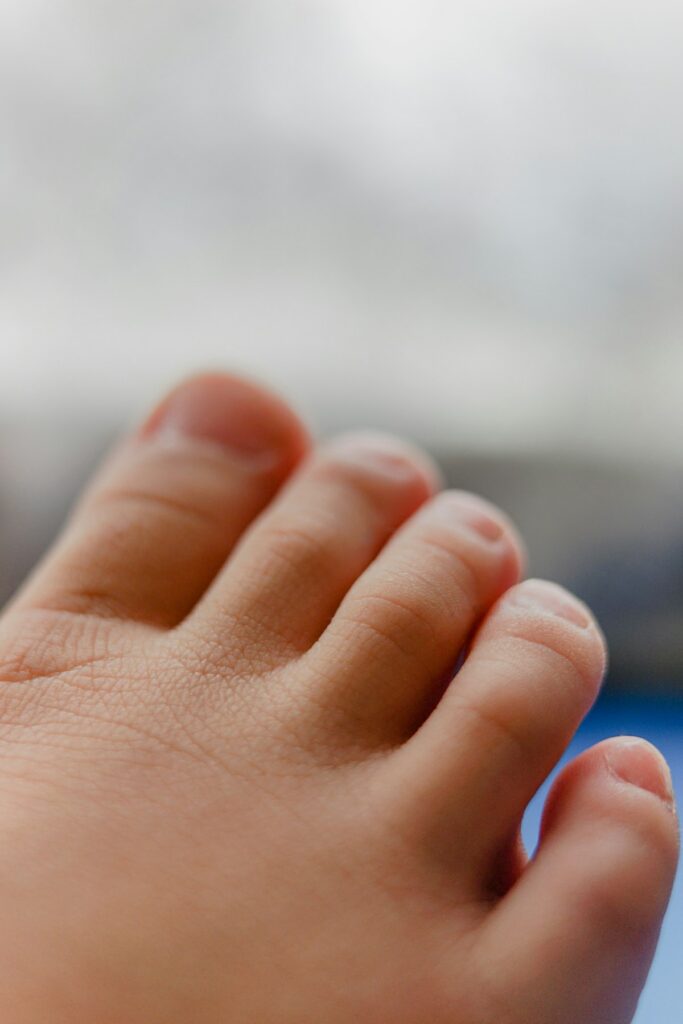
Photo for illustration. Images do not depict patients of this practice.
How gout is diagnosed
Joint fluid
The definitive test is examining fluid drawn from the joint under a polarising microscope, where urate crystals are directly visible. It also excludes infection. This is not always necessary when the presentation is classic, but it gives certainty before committing to long-term treatment.
Blood tests
Uric acid is measured, but with an important caveat: levels often fall during an acute attack, so a normal result at that moment does not exclude gout. It should be rechecked once the attack has settled. Kidney function is also checked, since it both contributes to gout and guides medication choice.
Imaging
Ultrasound can show a characteristic double contour sign where crystals coat the cartilage. Dual-energy CT identifies urate deposits directly. X-rays are usually normal early on but show typical erosions in longstanding disease.
We will take a full history, examine every affected joint and order only the tests that change your care.
Schedule Your VisitTreating the attack and preventing the next one
During an attack
Anti-inflammatory tablets, colchicine or a short course of steroids will settle it, and the earlier treatment starts the faster it resolves. Rest the joint, apply ice, and keep bedding off the toe. A steroid injection into the joint is an option when tablets are unsuitable.
Preventing recurrence
This is the part most often missed. Treating attacks relieves pain but leaves the crystals in place, so they keep returning and gradually involve more joints. Urate-lowering therapy, usually allopurinol or febuxostat, reduces uric acid so existing crystals dissolve and no new ones form. Once levels reach target, usually below 6 mg/dL, attacks stop for the large majority of people.
Two things commonly cause confusion. Starting urate-lowering therapy can itself trigger attacks in the first few months as crystals dissolve, so a preventive medicine is usually prescribed alongside it for three to six months. And the treatment is lifelong: stopping because attacks have ceased simply allows uric acid to rise again.
Diet
Reducing beer, spirits and fructose-sweetened drinks helps, as does moderating red meat and shellfish and keeping well hydrated. Diet supports treatment but rarely lowers uric acid enough on its own in someone who has had repeated attacks.
Treatment is matched to your diagnosis, your other conditions and your goals.
Start Your Treatment PlanPreparing for the next attack
Once you have had one gout attack, the most useful thing you can do is make sure the next one is treated within hours rather than days. Speed of treatment is the single biggest factor in how long an attack lasts, and waiting for an appointment usually means several extra days of severe pain.
Agree a plan in advance
Ask your doctor for a written plan covering which medicine to take, at what dose, how soon, and for how long. Many patients are given a supply to keep at home so treatment can start at the first twinge, which is often hours before the joint is visibly swollen.
Recognise the warning signs
Most people learn to recognise a distinctive sensation in the joint before an attack fully develops: an ache, tingling or a feeling that something is not right. Treating at that point can abort the attack altogether.
Practical measures during an attack
- Rest the joint and avoid weight-bearing where possible
- Apply ice for fifteen to twenty minutes several times a day
- Keep bedding off the toe using a frame or a pillow at the foot of the bed
- Wear an open shoe or sandal rather than forcing a normal shoe
- Keep drinking fluids
- Continue any urate-lowering medication you are already on; do not stop it during an attack
Record it
Note the date, which joint, how long it lasted, and anything that preceded it. A pattern of attacks is exactly the evidence needed to justify starting preventive treatment, and it also shows whether existing treatment is working.
When to seek care
Seek same-day assessment for a hot, swollen, severely painful joint with fever or feeling unwell, because joint infection must be excluded quickly.
See a rheumatologist if attacks keep returning, if uric acid will not come down to target, if you have developed lumps under the skin called tophi, if kidney disease or drug intolerance complicates treatment, or if the diagnosis has never been confirmed. Recurrent gout is one of the most treatable conditions in rheumatology, and near-complete control is a realistic goal.
New patients are welcome at our Katy clinic, and a referral is not required for most plans.
Talk to Our RheumatologistPLACEHOLDER: this page must be reviewed and approved by Dr. Syed Alam before launch. Add the review date here.
Possible causes
Conditions associated with this
Frequently asked questions
Sudden Big Toe Pain and Swelling: your questions answered
Is sudden big toe pain always gout?
It is the most common cause of a sudden, red, hot, exquisitely painful big toe, particularly overnight in an adult. But joint infection can look identical and is an emergency, so a hot swollen joint with fever should be assessed the same day.
My uric acid was normal. Can it still be gout?
Yes. Uric acid levels frequently fall during an acute attack, so a normal result at that time does not exclude gout. It should be rechecked once the attack has settled, when it gives a more reliable picture.
How long does a gout attack last?
Untreated, typically one to two weeks. With prompt treatment, considerably less. The speed of resolution depends heavily on how quickly treatment is started, which is why having a plan in place for the next attack is useful.
Why do my attacks keep coming back?
Almost always because uric acid remains above target. Anti-inflammatory treatment relieves the attack but leaves the crystals in place. Urate-lowering therapy taken consistently, with levels checked until they reach target, stops attacks for most people.
Can I prevent gout with diet alone?
Diet helps, but genetics, kidney function and medications such as diuretics usually matter more. In someone with recurrent attacks, diet alone rarely lowers uric acid enough, and relying on it delays effective treatment.
Should I walk on it during an attack?
Rest the joint during an acute attack and avoid forcing weight through it. Ice helps, as does keeping bedding off the toe. Return to normal activity as the attack settles.
Can gout affect other joints?
Yes. The midfoot, ankle, knee, wrist, fingers and elbow are all commonly affected, particularly as the disease progresses. Attacks in several joints at once can resemble other kinds of arthritis.
Is gout linked to other health problems?
Yes. It travels with high blood pressure, kidney disease, diabetes, obesity and cardiovascular disease. A first attack is a useful prompt to review those risks as well as to treat the gout.
Still have a question?
Our office is happy to answer questions before you book. Call us or send a request and we will call you back.
Ask Us Your QuestionGet started
Get an evaluation at our Katy clinic
You do not need a diagnosis to make an appointment. Our rheumatologist will help find the cause.