
Osteoarthritis Treatment in Katy, TX
Osteoarthritis is the most common form of arthritis, caused by the gradual breakdown of cartilage in the joints. It cannot be reversed, but pain and function can be improved substantially, and it is important to confirm that an inflammatory arthritis is not present alongside it.
Meet Dr. Syed Alam, MD, FACR
Double Board-Certified, Fellowship-Trained Rheumatologist · Musculoskeletal Ultrasound Trained · 10+ Years of Experience
Dr. Alam completed his rheumatology fellowship at Temple University Hospital after an internal medicine residency at John H. Stroger, Jr. Hospital. His clinical interests include rheumatoid arthritis, lupus, psoriatic arthritis, gout, Sjögren’s disease, osteoporosis and other rheumatic conditions.
Read the full profile →
What is osteoarthritis?
Osteoarthritis develops when the smooth cartilage that caps the ends of bones gradually wears down. Cartilage lets a joint glide and cushions load. As it thins, bone begins to rub against bone, the joint surface becomes irregular, and small bony growths called osteophytes form at the edges.
It was long described as simple wear and tear, but that is an oversimplification. Osteoarthritis involves the whole joint, including the bone underneath the cartilage, the ligaments and the joint lining, and there is a genuine, if low-grade, inflammatory component. This is why some people have swelling and warmth as well as pain.
Osteoarthritis versus inflammatory arthritis
Distinguishing the two changes everything about treatment. Osteoarthritis typically affects one or two large joints or the finger joints nearest the nails, worsens with activity through the day, and produces stiffness that eases within about half an hour of getting up. Inflammatory arthritis affects several joints symmetrically, is worst in the morning with stiffness lasting over an hour, and often improves with movement. The two can coexist, and a rheumatologist can tell them apart.
Not sure whether your symptoms need a specialist? A rheumatology evaluation can give you a clear answer.
Request an AppointmentSymptoms of osteoarthritis
- Joint pain that worsens with use and improves with rest, at least early on
- Stiffness after sitting or on waking that eases within roughly 30 minutes
- Reduced range of movement and difficulty with stairs, kneeling or gripping
- A grating or crunching sensation in the joint, called crepitus
- Bony enlargement of the finger joints, particularly those nearest the nails
- Mild swelling, and occasionally a build-up of fluid in the knee
How it progresses
Osteoarthritis usually develops slowly over years. Pain that began only after long walks may eventually appear with everyday activity, and in advanced disease it can be present at rest and disturb sleep. Progression is not inevitable or uniform, and many people remain stable for long periods.
Which joints are affected
The knees and hips carry the most load and are the most commonly affected. In the hands, osteoarthritis characteristically involves the joints nearest the fingernails and the base of the thumb. It also affects the neck and lower back. Osteoarthritis in an unusual joint such as the knuckles, wrist or ankle, especially without previous injury, should prompt a search for another cause.
Early assessment gives you the widest range of treatment options.
Book an Evaluation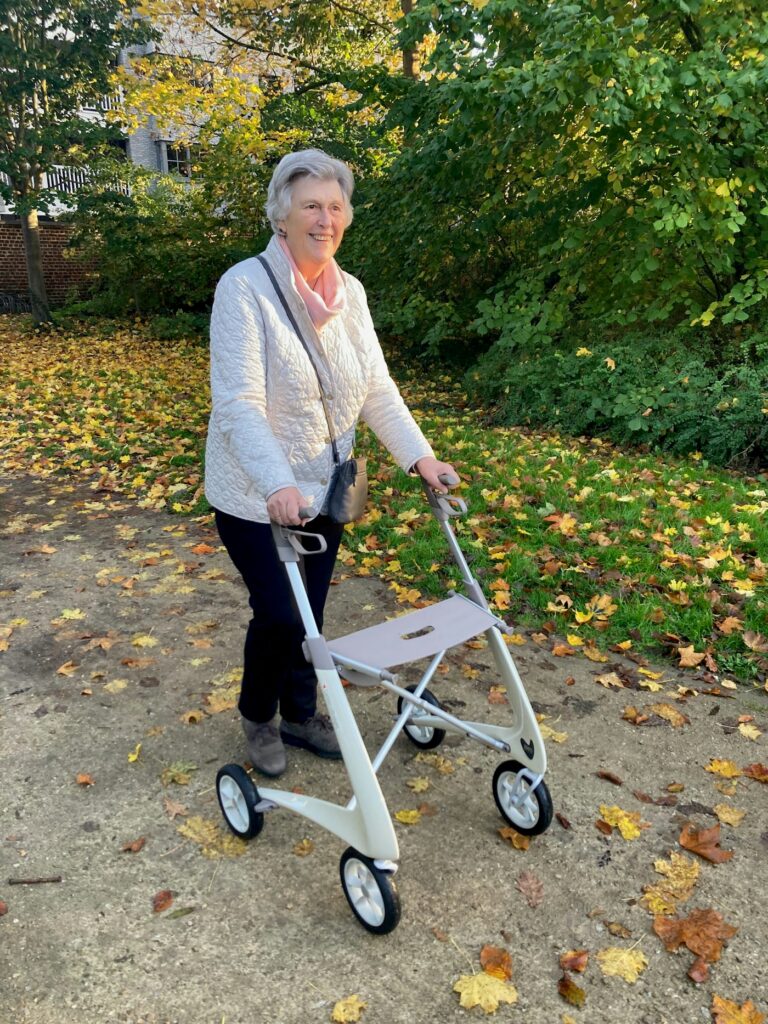
Photo for illustration. Images do not depict patients of this practice.
Causes and risk factors
- Age. The strongest risk factor, though osteoarthritis is not an inevitable part of getting older.
- Previous joint injury. A torn meniscus or ligament, or a fracture involving the joint, considerably raises later risk.
- Obesity. Extra weight increases load on the knees and hips, and body fat also contributes metabolically, which is why obesity affects hand osteoarthritis too.
- Genetics. Hand osteoarthritis in particular runs strongly in families.
- Sex. Osteoarthritis is more common in women, especially after menopause.
- Repetitive occupational loading. Jobs involving heavy lifting, kneeling or squatting increase risk.
- Joint shape and alignment. Bow legs, knock knees or hip dysplasia concentrate load unevenly.
How osteoarthritis is diagnosed
Osteoarthritis is diagnosed primarily from the history and examination. Tests are used mainly to gauge severity and to exclude other conditions.
Examination
Your rheumatologist assesses which joints are involved and in what pattern, tests range of movement, feels for bony enlargement, crepitus and swelling, and checks alignment and the strength of the surrounding muscles.
Imaging
X-rays can show cartilage loss as joint space narrowing, along with osteophytes and changes in the underlying bone. It is worth knowing that X-ray appearance and symptoms correlate poorly: some people have marked changes with little pain, and others have severe pain with modest findings. MRI is rarely needed for routine osteoarthritis.
Blood tests
There is no blood test for osteoarthritis. Tests are ordered to exclude inflammatory arthritis, and normal inflammation markers alongside a typical pattern support the diagnosis. If a joint is warm and swollen, drawing fluid can exclude gout, pseudogout or infection.
We will take a full history, examine every affected joint and order only the tests that change your care.
Schedule Your VisitOsteoarthritis treatment
The aims are to reduce pain, maintain function and delay or avoid surgery. Non-drug treatment is not a preliminary step before the real thing; it is the foundation, and it has better evidence than most medications.
Exercise and weight management
Exercise is among the most effective treatments available for osteoarthritis. Strengthening the muscles around a joint, particularly the quadriceps for knee osteoarthritis, reduces pain and improves function. Low-impact aerobic activity such as walking, cycling or water exercise is well tolerated. Exercise does not wear the joint out further; inactivity weakens the muscles that protect it. Where weight is a factor, losing even 5 to 10 percent of body weight produces a meaningful reduction in knee pain.
Medication
- Topical anti-inflammatory gels, effective for knee and hand osteoarthritis with few systemic effects
- Oral anti-inflammatories at the lowest effective dose, with attention to stomach, kidney and cardiovascular risk
- Acetaminophen, which helps some people though its effect is modest
- Duloxetine, useful where pain is chronic and widespread
Injections
A corticosteroid injection can give useful relief for weeks to a few months, particularly during a painful episode, and is helpful for bridging to a rehabilitation programme. Hyaluronic acid injections are used in some cases, though the evidence is mixed.
Supports and surgery
Braces, insoles, walking aids and hand splints reduce load and improve confidence. Joint replacement is highly effective and is considered when pain persists despite thorough non-surgical treatment and quality of life is significantly affected. Your rheumatologist can help you judge the timing and refer you appropriately.
Treatment is matched to your diagnosis, your other conditions and your goals.
Start Your Treatment PlanLiving with osteoarthritis
- Keep active on most days; consistency matters more than intensity.
- Build strength in the muscles supporting the affected joint.
- Pace demanding tasks and break them into shorter blocks.
- Use good footwear with cushioning and support.
- Apply heat before activity for stiffness and cold afterwards for swelling.
- Be sceptical of supplements marketed as cartilage cures; evidence for most is weak.
Common myths about osteoarthritis
Myth: it is simply wear and tear, so nothing can be done
Osteoarthritis involves the whole joint, including bone, ligaments and the joint lining, and there is a genuine inflammatory element. More importantly, pain and function respond well to treatment even though the cartilage does not regrow. Telling someone that nothing can be done is both inaccurate and harmful, because it discourages the exercise that would help most.
Myth: exercise wears the joint out faster
The opposite is true. Muscle strength protects a joint by absorbing load, and inactivity weakens exactly the muscles that do that. Appropriate exercise reduces pain, improves function and delays the need for surgery. Cartilage is not a tyre tread being used up.
Myth: the X-ray tells you how bad it is
X-ray appearance and symptoms correlate poorly. Some people with marked changes have very little pain, and some with modest findings have severe symptoms. Treatment decisions, including surgery, are based on how you are affected rather than on the image alone.
Myth: joint replacement should be delayed as long as possible
Modern joint replacements last a long time, and waiting until you are deconditioned and have lost muscle mass makes recovery harder. The right time is when pain persists despite thorough non-surgical treatment and is limiting your life, not an arbitrary age.
Myth: supplements rebuild cartilage
No supplement has been shown to regenerate cartilage. Glucosamine and chondroitin are not harmful for most people but the evidence is weak. Money is usually better spent on a course of physical therapy or a good pair of shoes.
When to see a rheumatologist about osteoarthritis
Much osteoarthritis is managed well in primary care. A rheumatology opinion is worthwhile when the diagnosis is unclear, when several joints are involved, when a joint is warm and swollen, when symptoms began unusually early or in an unexpected joint, or when reasonable treatment has not helped.
It is also worth being seen if you have morning stiffness lasting more than an hour or symptoms in the knuckles or wrists, since these suggest an inflammatory arthritis rather than osteoarthritis and are treated very differently.
New patients are welcome at our Katy clinic, and a referral is not required for most plans.
Talk to Our RheumatologistPLACEHOLDER: this page must be reviewed and approved by Dr. Syed Alam before launch. Add the review date here.
Frequently asked questions
Osteoarthritis: your questions answered
Is osteoarthritis just part of getting older?
Age is the biggest risk factor, but osteoarthritis is not inevitable and it is not untreatable. Plenty of older adults never develop significant osteoarthritis, and pain and function can be improved considerably at any stage.
Will exercise wear my joints out faster?
No. This is one of the most common and most damaging misconceptions. Appropriate exercise strengthens the muscles that protect the joint, reduces pain and improves function. Inactivity makes osteoarthritis worse.
What is the difference between osteoarthritis and rheumatoid arthritis?
Osteoarthritis is degenerative, usually affects a few joints, and produces short-lived stiffness that eases within about 30 minutes. Rheumatoid arthritis is autoimmune, typically affects several small joints symmetrically, and causes morning stiffness lasting over an hour. Treatment is entirely different.
Do glucosamine and chondroitin work?
The evidence is weak and inconsistent. Neither is harmful for most people, but neither rebuilds cartilage. If you try them and notice no difference after a few months, there is little reason to continue.
How do I know when I need a joint replacement?
Generally when pain persists despite thorough non-surgical treatment, limits daily activity or sleep, and imaging shows advanced change. It is a quality-of-life decision rather than one dictated by the X-ray alone.
Can osteoarthritis affect my hands?
Yes. It commonly affects the joints nearest the fingernails and the base of the thumb, causing bony enlargement and aching. Osteoarthritis affecting the knuckles is less typical and should prompt evaluation for another cause.
Does cold or damp weather make it worse?
Many people report more stiffness in cold or damp conditions. Weather does not damage the joint or change the disease, but it can affect comfort, and staying active through cooler months helps.
Can I have osteoarthritis and an inflammatory arthritis at the same time?
Yes, and it is not unusual, particularly in older adults. If a joint becomes unusually swollen, warm or painful in a way that does not fit your normal pattern, it deserves a fresh look.

Still have a question?
Our office is happy to answer questions before you book. Call us or send a request and we will call you back.
Ask Us Your QuestionGet started
Concerned about osteoarthritis?
Our Katy rheumatology clinic diagnoses and treats this condition. Request an appointment or call our office to get started.