
Joint Pain and Swelling
Is a joint puffy, warm, or stiff enough to make gripping, walking, or climbing stairs harder? Have you noticed swelling that keeps coming back, or stiffness that lasts well into the morning? Did a blood test or your doctor suggest inflammation?
Joint pain and swelling can have many causes, from a minor strain to inflammatory arthritis. The goal of an evaluation is to understand what is causing your symptoms and which care fits, without assuming the worst.
Dr. Syed Alam evaluates joint pain and swelling at West Houston Arthritis and Rheumatology for patients from Katy and the surrounding communities.

Meet Dr. Syed Alam, MD, FACR
Double Board-Certified, Fellowship-Trained Rheumatologist · Musculoskeletal Ultrasound Trained · 10+ Years of Experience
Dr. Alam is a double board-certified rheumatologist who evaluates joint pain, swelling, and stiffness. You do not need a diagnosis to be seen; start by describing what has changed.
Read the full profile →
Are You Experiencing Joint Pain and Swelling?
Pain and swelling are not the same thing. Visible swelling means something has changed inside the joint itself, such as extra fluid or a thickened joint lining, and it often points to inflammation.
Signs to Notice
- A joint that looks puffy, feels warm, or is tender to press.
- Stiffness that is worst in the morning or after sitting still.
- Reduced movement, or a joint that will not fully straighten or bend.
- Trouble gripping, walking, or climbing stairs.
- Pain that built up over weeks without any injury.
- Symptoms that ease with movement rather than rest.
How to Tell True Swelling From Other Changes
A swollen joint loses its normal shape. Knuckles look puffy, and the small dips beside the kneecap disappear. Bony enlargement, by contrast, feels hard, does not change from day to day, and usually points to osteoarthritis rather than active inflammation. Check whether your symptoms need same-day care.
Recognize these changes in your joints? Request a visit to find out what may be causing them.
Request an AppointmentWhen Does Joint Swelling Need Same-Day Care?
Most joint swelling is not an emergency, but some situations need urgent assessment, not a routine appointment.
Get Medical Help Without Delay
- A single hot, very swollen, severely painful joint, especially with fever or feeling unwell: Seek same-day care. A joint infection (septic arthritis) must be ruled out quickly. If prompt assessment is not available, go to an emergency department.
- Swelling after a significant injury with inability to bear weight: Seek same-day care.
- A joint that suddenly cannot be moved at all: Seek same-day assessment.
- New joint swelling while taking medicine that suppresses the immune system: Contact the clinician managing that medicine the same day.
- Joint swelling with chest pain, trouble breathing, or a rapidly spreading rash: Call 911.
These examples are not a complete list. For ongoing, non-emergency symptoms, learn what may be causing them.
What May Be Causing Your Joint Pain and Swelling?
The possibilities below are not a diagnosis; an evaluation sorts them out.
Inflammatory and Autoimmune Arthritis
Rheumatoid arthritis, psoriatic arthritis, lupus, axial spondyloarthritis, and reactive arthritis can cause true joint swelling. They often affect more than one joint and cause prolonged morning stiffness. Timely treatment of these conditions can help protect joint function.
Crystal Arthritis
Gout and pseudogout cause sudden, severe swelling, usually in one joint. Gout classically starts in the big toe but can affect the ankle, knee, wrist, and fingers.
Osteoarthritis
Osteoarthritis can cause swelling, especially in the knee. Its stiffness usually eases within about 30 minutes of getting up, which helps distinguish it from inflammatory arthritis.
Clues From the Pattern and Timing
- Small joints of both hands and wrists can suggest rheumatoid arthritis.
- A whole finger or toe swollen along its length is typical of psoriatic arthritis.
- One knee or ankle can suggest injury, gout, or spondyloarthritis.
- Swelling within hours with intense pain suggests crystal arthritis or infection.
- Swelling building over weeks with long morning stiffness suggests inflammatory arthritis.
Learn when to arrange an evaluation.
Not sure what is behind your symptoms? A rheumatology evaluation can help clarify the cause and the next step.
Request an Evaluation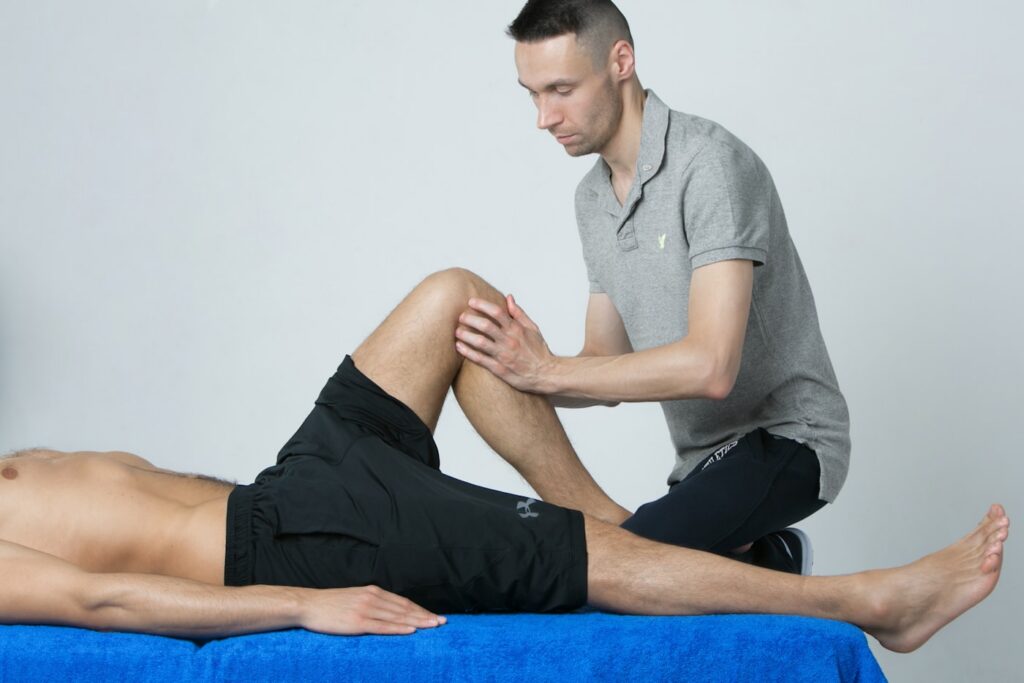
Photo for illustration. Images do not depict patients of this practice.
How Long Should You Wait Before Booking?
Swelling after a minor strain or a viral illness often settles within a few weeks. Ask about a rheumatology evaluation if any of the following apply:
- A joint has stayed swollen for more than six weeks, or swelling keeps coming back.
- More than one joint is involved.
- Morning stiffness routinely lasts longer than an hour.
- Joint swelling comes with fatigue, a rash, fever, or unexplained weight loss.
You do not need to wait six weeks if your clinician is concerned, and you do not need a diagnosis or abnormal blood tests to be seen. Already referred? Ask whether the referral is routine or urgent, and tell your referring clinician if symptoms change while you wait. See what the evaluation involves.
Ongoing swelling deserves a next step. Request an evaluation rather than waiting for symptoms to become more disruptive.
Request an AppointmentWhat Does the Evaluation Involve?
Most of the diagnosis comes from your history and a careful examination rather than any single test.
Your History and Examination
You may be asked when the swelling started, which joints have been involved and in what order, how long morning stiffness lasts, and whether movement helps. Skin, bowel, and eye symptoms can also offer clues. Every joint is examined, not only the painful ones, because the overall pattern is one of the strongest clues.
Tests That May Be Ordered
- ESR and CRP measure inflammation, though they can be normal in active disease.
- Rheumatoid factor and anti-CCP help assess for rheumatoid arthritis.
- ANA is checked when a condition such as lupus is possible.
- Uric acid helps assess for gout, though it often falls during an attack.
- X-rays or ultrasound can show joint damage or inflammation inside the joint.
- Joint fluid analysis of a hot, swollen joint can distinguish infection from crystal arthritis.
Normal blood tests do not rule out inflammatory arthritis, and an abnormal result does not confirm a diagnosis on its own. Some conditions take more than one visit to clarify. See which type of care fits your symptoms.
Still looking for an explanation? Bring your previous results to a visit and discuss what they may mean.
Schedule Your VisitRheumatologist, Orthopedic Specialist, or Primary Care?
- Rheumatology focuses on inflammatory, autoimmune, and crystal causes of joint disease and their nonsurgical care.
- Orthopedics evaluates injuries and structural joint problems, including those that may need surgery.
- Primary care can help when the cause or appropriate specialty is unclear.
If there was no injury, and especially if several joints are involved or stiffness lasts a long time, rheumatology is often a sensible place to start.
Before Your Appointment
Photograph the joint on a bad day, since swelling may settle by the time you are seen. Anti-inflammatory tablets may ease symptoms if they are safe for you, but avoid starting steroids before assessment unless a doctor advises it, because they can mask the findings. Prepare for your visit.
Have questions about scheduling or referral requirements? Call our office before arranging your appointment.
Call Our OfficeWhat to Do Next
A little preparation helps your visit focus on what matters most to you.
- Describe the changes. Note when swelling began, which joints are affected, whether both sides are involved, and how long morning stiffness lasts.
- Gather your records. Bring previous blood test and imaging reports, not only the summary letter.
- List your medications. Include nonprescription medicines, supplements, and medication allergies.
- Confirm requirements. Check with the office and your insurance plan about referrals before scheduling.
At the visit, your history, examination, and previous results are considered together. Ask how results will be explained and when follow-up is needed.
West Houston Arthritis and Rheumatology welcomes patients from Katy, Fulshear, Cinco Ranch, Cypress, Richmond, Rosenberg, Sealy, Sugar Land, and West Houston to our office at 19002 Park Row Blvd, Suite 100, Houston, TX 77084. We are accepting new patients and accept most major insurance plans. Office hours are Monday through Friday, 8:00 AM to 5:00 PM.
Ready to find out what is causing your joint pain and swelling? Request an appointment or call our office to take the next step.
Request an Appointment Call (832) 305-5226Important: This page provides general education, not an individual diagnosis or treatment plan. Appointment requests are not monitored for emergencies. For a medical emergency, call 911.
Possible causes
Conditions That Can Cause Joint Swelling
Frequently asked questions
Common Questions About Joint Pain and Swelling
How do I know if my joint is really swollen or just painful?
A swollen joint loses its normal contours: knuckles look puffy, and the dips beside the kneecap disappear. It often feels warm. If you are unsure, compare it with the same joint on the other side, and photograph it on a bad day.
Should I see an orthopedic specialist or a rheumatologist?
Orthopedic specialists evaluate injuries and structural problems, including those that may need surgery. Rheumatologists focus on inflammatory, autoimmune, and crystal causes. If there was no injury, and several joints are involved or stiffness lasts a long time, rheumatology is often a sensible start.
Can joint swelling go away on its own?
Sometimes. Swelling after a minor strain or a viral illness often settles within a few weeks. Swelling that lasts beyond six weeks, keeps returning, or involves several joints should be evaluated rather than waited out.
Do normal blood tests mean nothing is wrong?
Not necessarily. Some people with active inflammatory arthritis have normal ESR and CRP, and rheumatoid factor can be negative in rheumatoid arthritis. Swelling found on examination still matters when blood tests are normal.
Is it safe to exercise with a swollen joint?
Gentle movement through a comfortable range usually helps prevent stiffness. Avoid heavy loading, impact, and anything that leaves the joint more swollen the next day. If a joint is suddenly hot and severely painful, rest it and seek assessment.
Why are my joints stiffer and more swollen in the morning?
Inflammatory fluid can build up while you are still overnight and disperse once you start moving. That is why inflammatory joint problems often feel worst on waking and improve as the morning goes on.
Can stress cause joint swelling?
Stress can make pain feel worse and may trigger flares in someone who already has inflammatory arthritis, but it does not by itself cause a truly swollen joint. Visible swelling needs a physical explanation.
What if only one joint is swollen?
A single swollen joint has a shorter list of causes, including injury, gout or pseudogout, infection, or early spondyloarthritis. A single hot, swollen joint with fever needs same-day care. Review the same-day warning signs.

Still Have a Question?
Call our office about appointments, referrals, or preparing for your visit.
Call Our OfficeGet started
Request an Appointment With Dr. Alam
Take the next step toward understanding joint pain and swelling that is not going away.