
Unexplained Body Pain and Fatigue
Widespread pain with exhaustion is common and has many causes. A rheumatologist can distinguish fibromyalgia from inflammatory and autoimmune disease.

Meet Dr. Syed Alam, MD, FACR
Double Board-Certified, Fellowship-Trained Rheumatologist · Musculoskeletal Ultrasound Trained · 10+ Years of Experience
Dr. Alam completed his rheumatology fellowship at Temple University Hospital after an internal medicine residency at John H. Stroger, Jr. Hospital. His clinical interests include rheumatoid arthritis, lupus, psoriatic arthritis, gout, Sjögren’s disease, osteoporosis and other rheumatic conditions.
Read the full profile →
What widespread pain with exhaustion usually means
Pain that is everywhere rather than in one place, combined with fatigue that sleep does not fix, is one of the most common reasons people are referred to rheumatology. It is also one of the most frustrating, because standard blood tests are usually normal and patients are frequently told nothing is wrong.
Something is wrong. The most common explanation is fibromyalgia, a disorder in which the nervous system amplifies pain signals so that sensations which would normally be mild are experienced as painful. This is measurable in research settings and is a recognised physiological process, not a diagnosis of exclusion given when tests come back clear.
Why the tests are normal
Blood tests measure inflammation and tissue damage. Fibromyalgia involves neither, so normal results are exactly what is expected. They confirm the pain is not coming from an inflammatory disease. They say nothing about whether the pain is real.
Not sure whether your symptoms need a specialist? A rheumatology evaluation can give you a clear answer.
Request an AppointmentThe pattern to look for
- Pain on both sides of the body, above and below the waist, lasting more than three months
- Pain described as aching, burning or throbbing, which moves and varies day to day
- Waking unrefreshed however long you sleep
- Fatigue that is not relieved by rest
- Difficulty with concentration, memory and word-finding
- Heightened sensitivity to touch, pressure, cold, noise or light
- A sensation of swelling in the hands without any visible swelling
Commonly associated problems
Headaches or migraine, irritable bowel symptoms, bladder urgency, jaw pain, restless legs and low mood occur frequently alongside it. These are part of the same picture rather than separate coincidences.
The boom and bust cycle
Most people describe using a good day to catch up on everything, then paying for it with several bad days. Recognising and breaking this cycle is one of the most effective things you can do, and it is a learned skill rather than a matter of willpower.
Early assessment gives you the widest range of treatment options.
Book an Evaluation
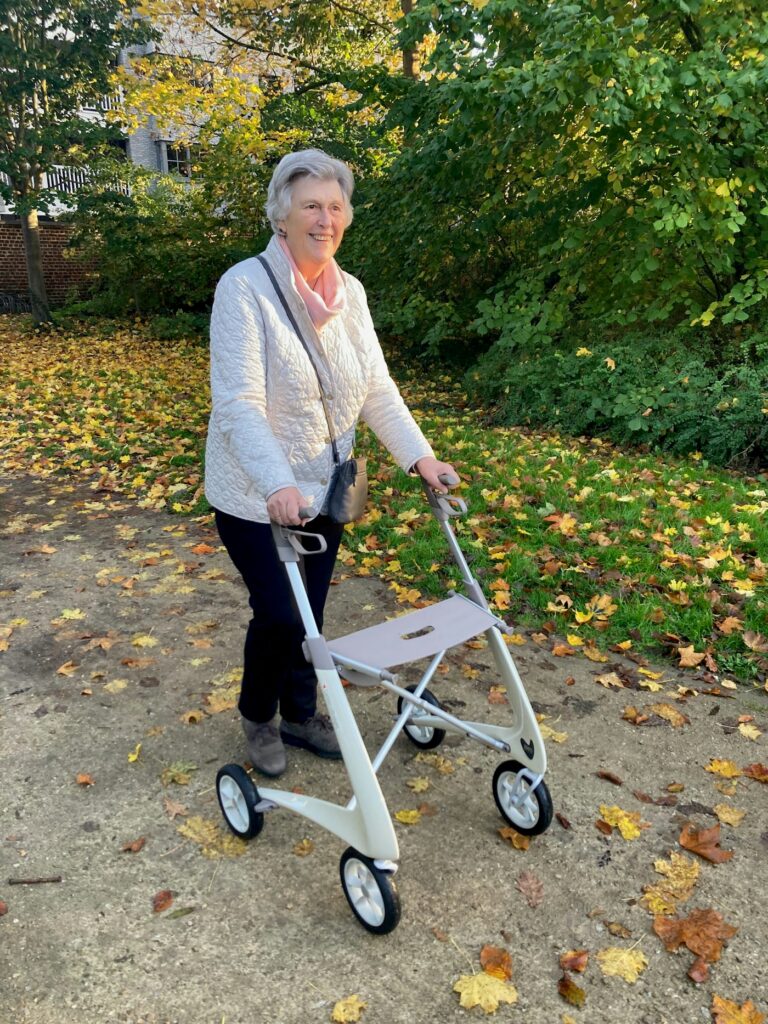
Photo for illustration. Images do not depict patients of this practice.
What else needs excluding
Several treatable conditions produce widespread aching and exhaustion, and finding one can change everything without any rheumatology treatment.
- Underactive thyroid, causing aching, fatigue, cold intolerance and weight gain
- Anaemia, including iron deficiency
- Vitamin D deficiency, common and easily corrected
- Obstructive sleep apnoea, frequently undiagnosed and a major cause of unrefreshing sleep
- Polymyalgia rheumatica in people over 50, with shoulder and hip stiffness and a raised ESR
- Inflammatory arthritis, particularly early on when swelling may be subtle
- Statins and some other medications
- Depression and anxiety, which both cause and result from chronic pain
If you snore, wake unrefreshed or have been told you stop breathing at night, ask specifically about sleep apnoea. It is common, treatable, and frequently the missing piece.
How it is assessed
Diagnosis is clinical, based on the distribution and duration of pain together with the severity of fatigue, sleep and cognitive symptoms. The older method of pressing eighteen specific tender points is no longer required, though examination still matters for excluding joint inflammation.
Tests used to exclude other causes
- Full blood count, ESR and CRP, all normal in fibromyalgia
- Thyroid function
- Vitamin D and B12
- Creatine kinase if there is genuine muscle weakness
- ANA and rheumatoid factor, interpreted cautiously since weak positives are common in healthy people
Broad autoimmune panels in someone with widespread pain and no other features often produce weakly positive results that cause worry and lead to more testing without changing the diagnosis. This is one reason the assessment matters more than the panel.
We will take a full history, examine every affected joint and order only the tests that change your care.
Schedule Your VisitWhat actually helps
Graded exercise
This has the best evidence of any single treatment, and it is genuinely counter-intuitive. Start well below what feels possible on a good day, keep it consistent regardless of how you feel, and increase very slowly. Expect a temporary increase in symptoms in the first few weeks; this settles and is not a sign of harm. Walking, water-based exercise, cycling and tai chi are all well supported.
Sleep
Pain and poor sleep reinforce each other, so improving sleep is high-yield. Consistent timing, a wind-down routine, limiting screens and caffeine, and treating sleep apnoea or restless legs all help.
Medication
Duloxetine, pregabalin and low-dose amitriptyline act on pain signalling and often improve sleep as well. Equally important is what is not recommended: opioids are ineffective and carry real risks, and steroids do not help because there is no inflammation to suppress.
Pacing and psychological approaches
Cognitive behavioural therapy and pain-management programmes have good evidence, not because the pain is psychological, but because how we respond to persistent pain measurably affects how much it limits us.
Treatment is matched to your diagnosis, your other conditions and your goals.
Start Your Treatment PlanBuilding an exercise plan that actually works
Graded exercise has the strongest evidence of any treatment for fibromyalgia, and it is also the one people most often abandon. That is usually because of how it is started rather than because it does not work.
Start lower than feels sensible
Pick a level you could manage on your worst day, not your best. For many people that is five minutes of walking. This feels absurdly easy on a good day, and that is exactly the point: the plan has to survive the bad days to work at all.
Be consistent rather than ambitious
- Do the same amount every day regardless of how you feel
- Increase by no more than about ten percent a week
- If a week goes badly, hold at the current level rather than stopping
- Choose something you can do at home when getting out is too much
- Track what you did, not how it felt
Expect it to hurt more at first
A temporary increase in symptoms over the first few weeks is normal and is not a sign of harm. This is the point most people stop, having concluded that exercise is making things worse. It settles as the nervous system adapts, usually within a few weeks.
What kind of exercise
Walking, water-based exercise, cycling and tai chi all have good evidence. Warm water is particularly well tolerated. Strength work can be added gradually once aerobic activity is established. The best exercise is the one you will still be doing in three months.
Consider asking for referral to a physical therapist familiar with chronic pain, who can build the programme with you and adjust it when progress stalls.
When to see a rheumatologist in Katy
See a rheumatologist if widespread pain has lasted more than three months with fatigue and unrefreshing sleep, or if you have been told your tests are normal but have had no explanation and no plan.
Assessment is especially important if you also have joint swelling, rash, fever, weight loss or genuine muscle weakness, since those point to a different or additional diagnosis. Fibromyalgia can also coexist with inflammatory arthritis, and separating the two prevents unnecessary escalation of immune-suppressing treatment.
New patients are welcome at our Katy clinic, and a referral is not required for most plans.
Talk to Our RheumatologistPLACEHOLDER: this page must be reviewed and approved by Dr. Syed Alam before launch. Add the review date here.
Possible causes
Conditions associated with this
Frequently asked questions
Unexplained Body Pain and Fatigue: your questions answered
Is fibromyalgia a real condition?
Yes. It is recognised by every major medical body and has a demonstrable basis in how the nervous system processes pain. Normal blood tests reflect the absence of tissue damage, not the absence of the condition.
Why are all my tests normal?
Blood tests measure inflammation and tissue damage. Fibromyalgia involves neither, so normal results are expected. They are useful because they exclude inflammatory arthritis, thyroid disease and anaemia, which need different treatment.
Will it damage my joints?
No. Fibromyalgia causes pain but no damage to joints, muscles, bones or organs, and it does not shorten life. If a joint becomes visibly swollen, that needs separate assessment since it is not explained by fibromyalgia.
Why does exercise make me feel worse at first?
A temporary increase in symptoms when starting is common and is not a sign of harm. Beginning well below your perceived limit and increasing very gradually allows the nervous system to adapt. The initial increase usually settles within a few weeks.
Do strong painkillers help?
Opioids are not effective for fibromyalgia and can increase pain sensitivity over time. Medicines that act on pain-signalling pathways, such as duloxetine, pregabalin or low-dose amitriptyline, are more appropriate and often improve sleep too.
Could it be something else?
It could. Thyroid disease, anaemia, vitamin D deficiency, sleep apnoea, polymyalgia rheumatica and early inflammatory arthritis all cause similar symptoms. A proper assessment checks these rather than assuming.
Can I have fibromyalgia and arthritis together?
Yes, and it is common. Distinguishing which symptoms come from which is important, because escalating immune-suppressing treatment will not help fibromyalgia pain and carries its own risks.
Will it ever go away?
Symptoms usually fluctuate rather than disappearing entirely, but many people improve substantially and return to full activity with a consistent plan. Outcomes are better with early diagnosis than with prolonged uncertainty.
Still have a question?
Our office is happy to answer questions before you book. Call us or send a request and we will call you back.
Ask Us Your QuestionGet started
Get an evaluation at our Katy clinic
You do not need a diagnosis to make an appointment. Our rheumatologist will help find the cause.