
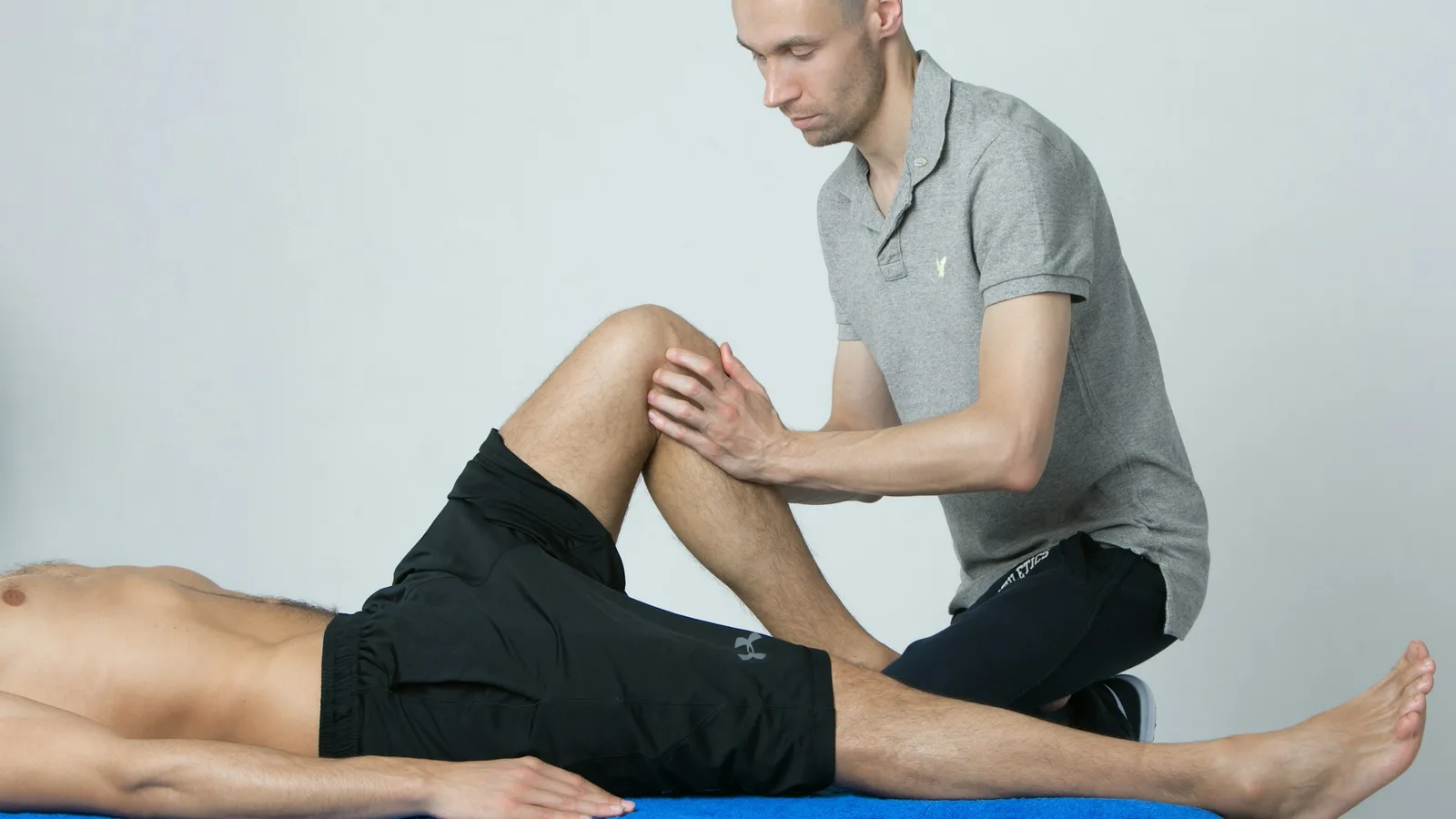
What is the difference between a rheumatologist and an orthopedic doctor?
A rheumatologist is an internal medicine physician who diagnoses and treats arthritis and autoimmune diseases with medicines and other nonsurgical care. An orthopedic doctor is a surgeon who treats injuries and structural problems of bones, joints, ligaments, and tendons, using both nonsurgical treatment and surgery. The cause of your pain usually decides which fits.
The simplest way to think about it: rheumatologists ask why is the immune system or body chemistry attacking this joint? Orthopedic surgeons ask what is mechanically damaged, and can it be repaired or replaced? Both are important, and they often work together.
| Feature | Rheumatologist | Orthopedic doctor |
|---|---|---|
| Core training | Internal medicine residency plus a rheumatology fellowship | Orthopedic surgery residency, often plus a subspecialty fellowship |
| Main focus | Inflammatory, autoimmune, and metabolic joint and connective tissue disease | Injuries, mechanical damage, and structural problems |
| Performs surgery? | No | Yes, when needed |
| Typical treatments | Disease-modifying medicines, biologics, joint injections, lifestyle and bone-health care | Bracing, casting, injections, physical therapy referrals, arthroscopy, joint replacement |
| Common conditions | Rheumatoid arthritis, lupus, gout, psoriatic arthritis, ankylosing spondylitis | Fractures, torn ligaments, rotator cuff tears, advanced joint damage |
| Relationship over time | Often long-term management of chronic disease | Often episode-based around an injury or procedure |
Neither specialist is “better.” Seeing the right one first simply saves time, avoids unnecessary tests, and gets you to an effective treatment sooner.
What does a rheumatologist treat?
Rheumatologists treat more than 100 types of arthritis and related conditions, including rheumatoid arthritis, psoriatic arthritis, lupus, gout, ankylosing spondylitis, Sjögren’s disease, vasculitis, polymyalgia rheumatica, and osteoporosis. Many of these are systemic, meaning they can affect skin, eyes, kidneys, lungs, or blood vessels as well as joints.
According to the American College of Physicians, rheumatologists complete a three-year internal medicine residency followed by a two-year rheumatology fellowship. That internal medicine foundation matters because many rheumatic diseases are whole-body conditions. Joint pain might be the first clue to a problem that also involves the skin, eyes, or internal organs.
Common reasons people are referred to a rheumatologist include:
- Joint swelling in several joints, especially the hands, wrists, or feet, as seen in rheumatoid arthritis.
- Sudden, intensely painful, red, hot joints — a classic pattern of gout.
- Joint pain with a rash, psoriasis, mouth sores, or unexplained fevers.
- Inflammatory back pain in younger adults that improves with movement.
- Abnormal blood tests such as a positive ANA, rheumatoid factor, or anti-CCP.
- Bone-thinning concerns and fracture risk from osteoporosis.
Rheumatologists do not operate. Instead, they use medicines that calm inflammation and protect joints from long-term damage, along with joint injections, exercise guidance, and coordination with other specialists.
Not sure your joint pain is mechanical?
If your joints are swollen, stiff in the morning, or hurting in more than one place, a rheumatology evaluation can look for inflammatory or autoimmune causes before damage builds up.
Request an AppointmentWhat does an orthopedic doctor treat?
Orthopedic doctors, or orthopedic surgeons, treat injuries and diseases of the musculoskeletal system: bones, joints, ligaments, tendons, muscles, and nerves. They manage fractures, sports injuries, torn ligaments and tendons, and joints damaged by wear or arthritis. Many problems are treated without surgery, but they are the specialists who operate when repair or replacement is needed.
The American Academy of Orthopaedic Surgeons (AAOS) notes that orthopedic surgeons complete up to 14 years of formal education, including a five-year orthopedic residency and often a fellowship in an area such as sports medicine, spine, hand, or joint replacement. The AAOS also emphasizes that seeing an orthopedic surgeon does not necessarily mean you will have surgery. Options often include medication, injections, bracing or casting, and physical therapy.
Typical reasons to see an orthopedic doctor include:
- A clear injury, such as a fall, twist, sports collision, or car accident, followed by pain or swelling.
- A suspected broken bone or a joint that looks deformed.
- Locking, catching, or giving way of the knee, suggesting a meniscus or ligament tear.
- Shoulder weakness after an injury, raising concern for a rotator cuff tear.
- Advanced joint damage, such as bone-on-bone osteoarthritis, when conservative care is no longer enough.
- Carpal tunnel symptoms, trigger finger, or tendon problems that may need a procedure.
Which symptoms suggest you should see a rheumatologist?
Symptoms that point toward a rheumatologist include swelling in several joints, morning stiffness lasting more than 30 to 60 minutes, pain that improves with activity, symmetrical joint involvement, and joint pain combined with fatigue, rash, fever, or dry eyes. Pain without a clear injury is another important clue.
Inflammatory joint disease tends to behave differently from mechanical injury. Here are patterns rheumatologists look for:
- Long morning stiffness. Stiffness that lasts well over half an hour after waking is a hallmark of inflammatory arthritis. Learn more on our morning joint stiffness page.
- Many joints at once. Pain and swelling in several small joints, often on both sides of the body.
- No injury. A knee that swells up without any fall or twist deserves a closer look — see our guide to a swollen knee without injury.
- Whole-body symptoms. Fatigue, low-grade fevers, weight loss, rashes, or dry eyes and mouth alongside joint pain.
- Sudden, severe attacks. A red, hot, exquisitely tender joint — especially the big toe — that flares overnight, which can signal gout.
- Back pain that improves with exercise. Chronic low back pain starting before age 45 that eases with movement and worsens with rest may suggest axial spondyloarthritis.
A quick way to decide where to start
- Injury?A clear fall, twist, or impact followed by pain points first toward orthopedics.
- Swelling?Swollen joints without injury, especially several at once, point toward rheumatology.
- Stiffness?Long morning stiffness and pain that eases with movement suggest inflammation.
- Whole body?Fatigue, rash, fever, or dryness with joint pain usually call for a rheumatologist.
Which symptoms suggest you should see an orthopedic doctor?
Symptoms that point toward an orthopedic doctor include pain that started with a specific injury, a joint that locks, catches, or gives way, visible deformity, suspected fractures, pain that worsens with activity and improves with rest, and one joint with long-standing wear-and-tear damage that is not responding to conservative care.
Mechanical problems often follow a predictable story. You remember the moment it started, the pain is focused in one spot, and certain movements reliably trigger it. A knee that buckles on stairs after a soccer injury, a shoulder that cannot lift overhead after a fall, or a wrist that swelled immediately after a slip are classic orthopedic presentations.
Wear-and-tear osteoarthritis sits in the middle. Rheumatologists and primary care doctors often manage early or moderate osteoarthritis with exercise, weight management, medicines, and injections, while orthopedic surgeons step in when a joint is severely damaged and replacement is being considered. Our article on osteoarthritis vs. rheumatoid arthritis explains how the two conditions differ.
Can you need both a rheumatologist and an orthopedic surgeon?
Yes. Many people benefit from both. A person with rheumatoid arthritis may see a rheumatologist for long-term medication and an orthopedic surgeon if a joint becomes badly damaged. Someone with an apparent injury may be found to have gout or inflammatory arthritis. The two specialists commonly coordinate care, often through your primary care doctor.
Common situations where the two specialties overlap include:
- Inflammatory arthritis with joint damage. Modern medicines have made severe joint destruction far less common, but some people with long-standing rheumatoid or psoriatic arthritis still need joint replacement or tendon repair. The rheumatologist manages disease activity and medications around the time of surgery, while the surgeon handles the operation.
- Gout mistaken for injury. A sudden, swollen knee or ankle can look like a sprain. Fluid drawn from the joint and examined for crystals can reveal gout or pseudogout, which needs medical rather than surgical treatment. See our gout treatment page.
- Osteoarthritis. Early care is often nonsurgical; advanced damage may lead to a surgical consultation.
- Osteoporosis and fractures. An orthopedic surgeon may repair a fragility fracture, while a rheumatologist or primary care doctor evaluates and treats the underlying bone loss.
When to seek care sooner
Call 911 or go to an emergency room for a joint that is suddenly hot, red, and swollen with fever or chills, which can signal a joint infection; an obvious deformity or suspected broken bone; inability to bear weight after an injury; or new numbness, weakness, or loss of bladder or bowel control with back pain. Same-day care is also wise for a calf that is swollen, warm, and painful.
How can your primary care doctor help you choose?
Your primary care doctor is often the best first stop. They can take your history, examine the joint, order initial blood tests and imaging, start basic treatment, and refer you to the right specialist. Some insurance plans also require a primary care referral before you see a rheumatologist or orthopedic surgeon.
A good primary care evaluation narrows things down quickly. Blood tests such as inflammation markers, rheumatoid factor, anti-CCP antibodies, ANA, and uric acid can raise suspicion for inflammatory or autoimmune disease, while X-rays or other imaging can show fractures or structural wear. Neither result alone makes a diagnosis, but together they help decide where to go next. Our page on rheumatology tests and diagnosis explains the common labs.
To get the most from a primary care visit, bring:
- A short timeline of when the pain started and whether there was an injury.
- Which joints hurt, whether they swell, and how long morning stiffness lasts.
- Any rashes, fevers, eye problems, or other new symptoms.
- A list of medicines and supplements, plus any family history of arthritis, psoriasis, or autoimmune disease.
Ready to see a rheumatologist?
If your symptoms point toward inflammation or an autoimmune cause, Dr. Syed Alam can evaluate your joints, review prior labs and imaging, and build a nonsurgical plan.
Request an AppointmentWhat tests and treatments does each specialist typically use?
Rheumatologists rely heavily on the history, a detailed joint exam, blood tests for inflammation and autoantibodies, joint fluid analysis, and imaging. Orthopedic surgeons focus on the physical exam and imaging such as X-rays and MRI to find structural damage. Treatment follows the same split: medicines and nonsurgical care versus procedures and surgery when needed.
| Step | Rheumatologist | Orthopedic doctor |
|---|---|---|
| Key questions | Is there inflammation, an autoimmune process, or crystal disease? | Is something torn, broken, unstable, or worn out? |
| Common tests | ESR, CRP, rheumatoid factor, anti-CCP, ANA, uric acid, joint fluid analysis, imaging | X-rays, MRI, CT, sometimes ultrasound or nerve studies |
| First-line treatments | Anti-inflammatory medicines, DMARDs such as methotrexate, biologics, steroid injections | Rest, bracing, physical therapy, injections, activity changes |
| If first-line care fails | Adjust or switch medicines; consider additional therapies | Arthroscopy, repair, or joint replacement |
Where can I see a rheumatologist in West Houston, Katy, or Fulshear?
West Houston Arthritis and Rheumatology offers nonsurgical evaluation and treatment for inflammatory, autoimmune, and metabolic joint conditions. The office is led by double board-certified rheumatologist Dr. Syed Alam, MD, FACR, is accepting new patients, and serves patients from across Greater Houston, with patients elsewhere in Texas welcome to request an appointment.
Dr. Alam is board-certified in internal medicine and rheumatology, completed his rheumatology fellowship at Temple University Hospital and his internal medicine residency at John H. Stroger, Jr. Hospital, is trained in musculoskeletal ultrasound, and has more than 10 years of rheumatology experience. The office is at 19002 Park Row Blvd, Suite 100, Houston, TX 77084, open Monday through Friday, 8:00 AM to 5:00 PM. Call (832) 305-5226.
Patients come from Katy, Fulshear, Cinco Ranch, Cypress, Richmond, Rosenberg, Sealy, Sugar Land, and West Houston. The practice accepts most major insurance plans. If you are still deciding, our guide on when to see a rheumatologist walks through the most common reasons for referral.
Key takeaways
- Rheumatologists treat arthritis and autoimmune disease with medicines and other nonsurgical care; orthopedic doctors treat injuries and structural damage and perform surgery.
- Swelling without injury, long morning stiffness, many affected joints, and whole-body symptoms point toward a rheumatologist.
- A specific injury, locking or giving way, deformity, or a suspected fracture points toward an orthopedic doctor.
- Many patients need both specialists at different times, especially with long-standing arthritis or osteoporosis.
- Your primary care doctor can order first-line tests and help you choose the right referral.
Frequently asked questions
Should I see a rheumatologist or orthopedic doctor for knee pain?
It depends on the cause. Knee pain after a twist, fall, or sports injury usually starts with an orthopedic doctor. A knee that swells without injury, especially with other joint symptoms, morning stiffness, or a history of gout or psoriasis, is often better evaluated by a rheumatologist.
Do rheumatologists perform surgery?
No. Rheumatologists are internal medicine specialists who treat with medicines, joint injections, and other nonsurgical care. When surgery is needed, they work alongside orthopedic surgeons.
Who treats osteoarthritis, a rheumatologist or an orthopedic doctor?
Both can. Early and moderate osteoarthritis is often managed with exercise, weight management, medicines, and injections by primary care doctors or rheumatologists. Orthopedic surgeons become involved when damage is advanced and joint replacement is being considered.
Who should I see for hand and wrist pain?
Swelling and stiffness in several finger joints, especially on both hands, can suggest rheumatoid or psoriatic arthritis and fits rheumatology. Numbness, tendon catching, or pain after an injury often fits an orthopedic hand specialist.
Who treats gout?
Primary care doctors often treat simple gout, and rheumatologists manage frequent attacks, gout that is hard to control, or cases where the diagnosis is uncertain. Gout is a medical condition treated with medicines that lower uric acid, not surgery.
Do I need a referral to see either specialist?
That depends on your insurance plan. HMO-style plans often require a primary care referral, while many PPO plans do not. Check with your insurer, or see our insurance page for general guidance.
Your next step
Get the right answer for your joint pain
If your symptoms sound inflammatory or autoimmune, a rheumatology visit can clarify the cause and start a nonsurgical treatment plan. Dr. Syed Alam sees patients from West Houston, Katy, Fulshear, Cinco Ranch, Cypress, Richmond, and Sugar Land.
Request an AppointmentSources and further reading
- Rheumatology, American College of Physicians.
- Orthopaedics: Orthopaedic Surgeons, American Academy of Orthopaedic Surgeons (OrthoInfo).
- Arthritis, National Institute of Arthritis and Musculoskeletal and Skin Diseases.
- Rheumatoid Arthritis, National Institute of Arthritis and Musculoskeletal and Skin Diseases.
- Osteoarthritis, National Institute of Arthritis and Musculoskeletal and Skin Diseases.
- Joint Pain, MedlinePlus Medical Encyclopedia.
- Sports Injuries, MedlinePlus.
- Patient Resources, American College of Rheumatology.