Why is hydroxychloroquine used for lupus?
Hydroxychloroquine is an antimalarial medicine that calms an overactive immune system without broadly suppressing it. In lupus it helps control joint pain, rashes, fatigue, and mouth sores, and it lowers the chance of flares. The American Academy of Ophthalmology describes it as the preferred treatment for systemic lupus erythematosus.
Hydroxychloroquine was first developed to treat malaria. Doctors later noticed that it also eased the symptoms of autoimmune diseases, and today it is one of the most widely used medicines in rheumatology. It belongs to a group called disease-modifying antirheumatic drugs (DMARDs), which work on the underlying immune process rather than simply masking pain.
For people with lupus, hydroxychloroquine is often described as a foundation medicine. It is recommended for most patients unless there is a specific reason not to use it, and it is usually continued long term, even when symptoms are quiet. It is also used for rheumatoid arthritis, Sjögren’s disease, and some skin and inflammatory conditions.
A few practical points patients often find helpful:
- It works slowly. According to the American College of Rheumatology, symptoms may begin to improve in one to two months, but the full benefit can take up to six months.
- It is not a broad immune suppressant. Unlike many stronger medicines, it is not generally linked to a large increase in serious infections.
You can learn how it fits alongside other medicines on our lupus treatment page.
Questions about your lupus medicines?
Dr. Syed Alam, a double board-certified rheumatologist, can review your hydroxychloroquine use, your dose, and your eye-screening schedule so you know exactly where you stand.
Request an AppointmentWhy do you need eye exams while taking hydroxychloroquine?
Long-term hydroxychloroquine use can, in a small percentage of people, damage the retina, the light-sensing layer at the back of the eye. Early damage usually causes no symptoms, and advanced damage may not reverse. Regular screening finds changes early, while stopping or adjusting the drug can still protect your vision.
The specific concern is called hydroxychloroquine retinopathy. Over years of use, the medicine can build up in the retina and gradually injure the photoreceptor cells that detect light. The American Academy of Ophthalmology (AAO) explains that the retina typically stays normal for many years on proper dosing, but at an unpredictable point some people begin to show thinning of the outer retina that can then progress.
Here is the key reason screening matters: according to the AAO, most people who develop hydroxychloroquine toxicity have no visual symptoms at all in the early stages. Central reading vision is usually preserved until late. By the time someone notices blurry spots or trouble reading, the damage may already be significant. That is why you cannot rely on how your eyes feel — only specialized imaging can find the earliest changes.
The overall risk is real but modest. In large studies of long-term users evaluated with modern imaging, the prevalence of retinopathy has been in the general range of about 7.5 percent, with risk rising as dose and years of use increase. Following dosing and screening guidelines keeps that risk low; the AAO states that if its recommendations are followed, the risk of visual loss should be low.
How often do you need a hydroxychloroquine eye exam?
Current American Academy of Ophthalmology guidance advises a full baseline eye exam soon after starting hydroxychloroquine, then annual screening while you take it. If you have no significant risk factors, yearly screening may be deferred during the first five years. People with risk factors should be screened every year from the start.
The AAO updated its screening recommendations in late 2025, replacing guidance that had been in place since 2016. The core schedule is familiar — a baseline exam, then annual checks after about five years for lower-risk patients — but the newer guidance places more weight on getting a complete baseline with modern imaging early, so later scans have something to be compared against.
| Situation | When to be screened | Why it matters |
|---|---|---|
| Just starting hydroxychloroquine | Baseline exam soon after starting | Rules out existing retinal disease and creates a comparison point for future scans |
| Years 1–5, no major risk factors | Annual screening may be deferred | Retinal toxicity is uncommon early at recommended doses |
| After about 5 years of use | Every year while on the medicine | Risk increases with cumulative years of use |
| Any major risk factor present | Every year from the start, or as your eye doctor advises | Higher dose, kidney disease, tamoxifen, or starting at an older age raise risk |
| New vision changes at any time | Contact your eye doctor promptly | Symptoms should never wait for a scheduled visit |
Your own schedule may differ. Your ophthalmologist or optometrist sets the interval based on your exam, your dose, and your health history. If you have not had a baseline exam since starting the medicine, that is a good item to raise at your next rheumatology visit.
What happens during a hydroxychloroquine eye exam?
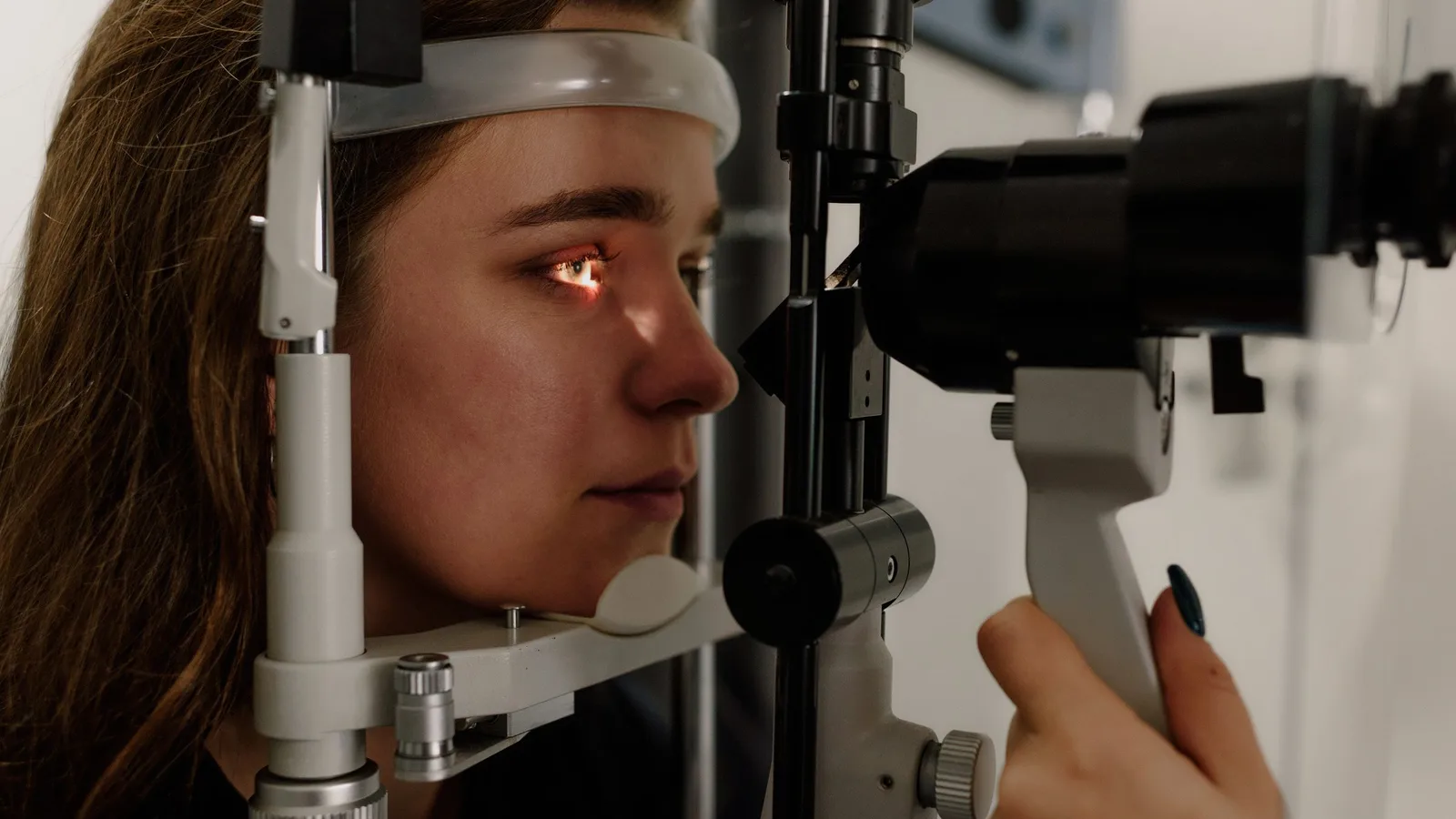
A hydroxychloroquine eye exam is more than a standard vision check. The AAO recommends optical coherence tomography (OCT), a painless scan of the retina’s layers, plus fundus autofluorescence (FAF) imaging as the primary screening tools. Visual field testing and multifocal electroretinography may be added to confirm suspicious findings.
A routine glasses prescription visit does not count as screening. The exam needs to include specialized retinal imaging. Here is what each test does, in plain language:
- Dilated retinal exam: Drops widen your pupils so the eye doctor can look at the back of the eye. This is especially important at baseline to check for pre-existing conditions.
- Optical coherence tomography (OCT): A quick, noncontact scan that creates cross-section images of the retina, a bit like an ultrasound that uses light. It can show thinning of the outer retinal layers before you notice anything.
- Fundus autofluorescence (FAF): A special photograph that highlights stressed retinal cells. A wide view helps catch damage that sometimes starts farther from the center of the retina.
- Automated visual field testing: You look into a bowl-shaped machine and click a button when you see small lights. It maps subtle blind spots.
- Multifocal electroretinography (mfERG): Measures the electrical response of the retina; used when results are unclear.
The AAO also notes that people of East Asian heritage more often show early changes in a ring farther from the center of the retina (a pericentral pattern), while many others show changes closer to the center (a parafoveal pattern). Because there are many exceptions, screening should look for both patterns in everyone.
Your hydroxychloroquine eye-safety routine
- BaselineGet a full eye exam with OCT and FAF imaging soon after starting the medicine.
- DoseLet your rheumatologist confirm your daily dose fits your current body weight and kidney function.
- ScreenReturn for annual screening as advised — every year after five years, or sooner with risk factors.
- ShareMake sure your eye doctor and rheumatologist see each other’s results.
Who has a higher risk of eye problems from hydroxychloroquine?
The biggest risk factors are a daily dose above about 5 mg per kilogram of actual body weight and many years of use. The AAO also lists kidney disease, taking tamoxifen, pre-existing retinal or macular disease, and starting hydroxychloroquine at an older age. People with these factors usually need closer screening.
Dose by weight is the most important factor you and your doctors can control. The AAO recommends keeping the daily dose at or below 5.0 mg per kilogram of real body weight, and it advises extra care in people with severe obesity so they are not overdosed by weight. This is a general safety standard, not an individual prescription — your rheumatologist calculates your dose and may adjust it over time.
| Risk factor | Why it matters | What usually happens |
|---|---|---|
| Higher dose for body weight | More drug exposure to the retina | Your doctor reviews dose against current weight |
| Long duration of use | Risk builds with cumulative years | Annual screening after about five years |
| Reduced kidney function | The kidneys help clear the drug, so levels can rise | Dose review and closer monitoring |
| Tamoxifen use | Associated with a higher rate of retinal toxicity | Earlier and more frequent screening |
| Existing retinal or macular disease | Makes screening harder and damage more harmful | Individual decision with your eye doctor |
| Starting at an older age | Identified as a risk factor in the newest AAO guidance | Screening plan tailored by your eye doctor |
Tell both your rheumatologist and your eye doctor if you lose a significant amount of weight, are diagnosed with kidney problems, or start a new medicine such as tamoxifen. Each of these can change how your dose and screening should be handled.
What other side effects can hydroxychloroquine cause?
Most people tolerate hydroxychloroquine well. The most common side effects are nausea, stomach upset, and diarrhea, which often ease with time. Less common effects include rash, hair thinning, skin color changes, and headache. Rare but serious problems include low blood sugar, heart rhythm changes, muscle weakness, and severe skin reactions.
MedlinePlus and the American College of Rheumatology list these possible effects:
- Common: nausea, diarrhea, stomach pain, loss of appetite, headache.
- Less common: rash, itching, hair thinning or color change, darkening of the skin, ringing in the ears.
- Low blood sugar (hypoglycemia): Possible, especially in people taking diabetes medicines. Symptoms include shakiness, sweating, confusion, or dizziness.
- Heart rhythm changes: Hydroxychloroquine can, rarely, affect the heart’s electrical rhythm (QT prolongation), particularly when combined with certain other medications. Your doctor may order an EKG in some situations.
- Rare serious reactions: blistering skin rashes, muscle weakness, numbness or tingling, unusual bruising, or mood changes.
The U.S. Food and Drug Administration has cautioned about heart rhythm problems with hydroxychloroquine, especially at high doses or in combination with other drugs that affect the heart’s rhythm. Always give every doctor and pharmacist a complete list of your medicines and supplements, including over-the-counter products. Our guide on what to bring to a rheumatology appointment includes a simple medication-list checklist.
When to seek care sooner
Call 911 or go to the nearest emergency room for chest pain, fainting, a racing or irregular heartbeat, trouble breathing, swelling of the face or throat, or a blistering or peeling rash. Contact your eye doctor the same day for sudden vision loss, a curtain or shadow over your vision, or new flashes and floaters. Call your doctor promptly for new blind spots, trouble reading, or symptoms of low blood sugar.
Should I stop hydroxychloroquine if I am worried about my eyes?
No — do not stop hydroxychloroquine on your own. Stopping can allow lupus to flare, sometimes seriously, and studies have linked discontinuation with more flares. If you are worried, talk with your rheumatologist. Decisions about stopping or continuing are made together with your eye doctor based on your actual screening results.
It is completely understandable to feel uneasy after reading about retinal damage. But for most people with lupus, the benefits of hydroxychloroquine are substantial, and the risk of eye problems is low with appropriate dosing and screening. Stopping suddenly trades a small, monitored risk for a larger and more immediate one: uncontrolled lupus activity that can affect joints, skin, kidneys, and other organs.
If screening ever shows early changes, the AAO notes that mild retinopathy is unlikely to progress significantly if the medicine is stopped at that stage, while more advanced damage can continue to worsen even after stopping. That is precisely why early detection matters. When an eye doctor does find early signs, the next step is a shared conversation among you, your eye doctor, and your rheumatologist. Some patients switch to other lupus treatments; others choose to continue with close monitoring when the medical need is high.
Unsure whether your plan is still right for you?
If you have concerns about hydroxychloroquine, eye screening, or side effects, a rheumatology visit can review your dose and treatment options before you make any change.
Request an AppointmentWho should do the eye exam, and how do my doctors share results?
Hydroxychloroquine screening is performed by an ophthalmologist or an optometrist who has OCT and fundus autofluorescence equipment. Your rheumatologist prescribes and doses the medicine, while your eye doctor performs the screening. Results should be shared in both directions so each doctor can act on the full picture.
Rheumatologists do not perform retinal imaging themselves, so screening happens at a separate eye-care office. When you book, say clearly that you take hydroxychloroquine and need a hydroxychloroquine screening exam, not just a vision check. That helps the office schedule the right imaging.
A simple routine that works well for many patients:
- Bring the name of your medicine, your dose, and the date you started it to every eye visit.
- Ask the eye office to send a copy of the report to your rheumatologist.
- Tell your eye doctor about kidney problems, tamoxifen use, or major weight changes.
- Bring your latest eye report to your next rheumatology visit.
In Texas and across the Gulf Coast, strong year-round sunshine is another reason to keep up with eye and skin care if you have lupus. Many people with lupus are sensitive to ultraviolet light, so sunglasses with UV protection and daily sunscreen are sensible habits, separate from medication screening. Our article on lupus vs. Sjögren’s symptoms also covers dry eyes, a different eye issue that is common in autoimmune disease.
| Bring | Ask your eye doctor | Tell your rheumatologist |
|---|---|---|
| Medication name, dose, and start date | Did today’s exam include OCT and autofluorescence imaging? | The date and result of your latest eye exam |
| Prior eye reports and images if available | Do you see any change compared with my baseline? | Any weight loss, kidney changes, or new medicines |
| A current medication list | When should I return for my next screening? | Any vision symptoms you have noticed |
Where can I get help with lupus care in West Houston, Katy, or Fulshear?
West Houston Arthritis and Rheumatology provides lupus evaluation and ongoing medication management, including reviewing hydroxychloroquine dosing and coordinating with your eye-care provider. The office is led by Dr. Syed Alam, MD, FACR, and is accepting new patients from across Greater Houston and Texas.
Dr. Syed Alam is double board-certified in internal medicine and rheumatology, completed his rheumatology fellowship at Temple University Hospital and his internal medicine residency at John H. Stroger, Jr. Hospital, and brings more than 10 years of rheumatology experience. The office is located at 19002 Park Row Blvd, Suite 100, Houston, TX 77084 and is open Monday through Friday, 8:00 AM to 5:00 PM. Call (832) 305-5226 or request an appointment online.
Patients come from Katy, Fulshear, Cinco Ranch, Cypress, Richmond, Rosenberg, Sealy, Sugar Land, and West Houston, and patients from elsewhere in Texas may request an appointment. The practice accepts most major insurance plans. If you are not sure whether your symptoms need a specialist, our guide on when to see a rheumatologist can help, and you can read more about Dr. Alam.
Key takeaways
- Hydroxychloroquine is a cornerstone lupus medicine that helps control symptoms and reduce flares.
- A hydroxychloroquine eye exam screens for rare retinal damage that usually causes no early symptoms.
- AAO guidance advises a baseline exam soon after starting, then annual screening — which may be deferred for the first five years if you have no major risk factors.
- Screening should include OCT and fundus autofluorescence imaging, not just a vision check.
- Never stop hydroxychloroquine on your own; talk to your rheumatologist about any concern.
Frequently asked questions
Is Plaquenil the same as hydroxychloroquine?
Yes. Plaquenil is a brand name for hydroxychloroquine. Generic versions contain the same active ingredient, and the same eye-screening guidance applies to both.
Can I just get a regular eye exam for glasses?
A standard vision check is not enough. Hydroxychloroquine screening should include retinal imaging such as optical coherence tomography (OCT) and fundus autofluorescence. Tell the office you take hydroxychloroquine when you book.
Will I notice symptoms if hydroxychloroquine affects my eyes?
Usually not at first. Early retinal changes typically cause no symptoms, which is why routine screening matters. Later, some people notice blind spots near the center of vision or difficulty reading. Report any new vision change promptly.
Does damage from hydroxychloroquine go away if I stop?
Retinal damage is generally not reversible. According to the AAO, mild changes are unlikely to progress much if the medicine is stopped early, but advanced damage can keep worsening. Early detection is the goal of screening.
How long does it take hydroxychloroquine to work for lupus?
Many people notice improvement within one to two months, but the full benefit can take up to six months. Keep taking it as prescribed even if you do not feel a difference right away.
Can I take hydroxychloroquine during pregnancy?
The American College of Rheumatology states hydroxychloroquine has been shown to be safe during pregnancy and breastfeeding, and stopping it can raise the risk of lupus flares. Discuss pregnancy plans with your rheumatologist before making any change.
Your next step
Keep your lupus treatment safe and on track
Hydroxychloroquine works best when dosing and eye screening are managed together. Dr. Syed Alam can review your medicines, answer your questions, and help coordinate a clear plan. Serving West Houston, Katy, Fulshear, Cinco Ranch, Cypress, and Sugar Land.
Request an AppointmentSources and further reading
- Recommendations on Screening for Hydroxychloroquine Retinopathy, American Academy of Ophthalmology.
- Hydroxychloroquine (Plaquenil), American College of Rheumatology.
- Hydroxychloroquine, MedlinePlus, U.S. National Library of Medicine.
- Lupus, National Institute of Arthritis and Musculoskeletal and Skin Diseases.
- FDA cautions about heart rhythm problems with hydroxychloroquine, U.S. Food and Drug Administration.
- Lupus, MedlinePlus.
- Learn About Eye Health, National Eye Institute.